Delhi’s Master Plan 2047 makes solar power central to city’s energy future
The Delhi Development Authority’s (DDA) approved Master Plan for Delhi 2047 (MPD-2047) proposes wider deployment of renewable energy across the national capital, with solar power identified as a key component of Delhi’s future energy mix.
The plan proposes exploring existing canals and drains, including a section of the Najafgarh drain, for solar power generation wherever technically feasible. Potential hydropower integration at suitable locations is also proposed. In greenfield areas, MPD-2047 encourages solar projects under Delhi’s Agriculture-cum-Solar Farm Scheme. The approach would allow land to support both agricultural activity and solar power generation.
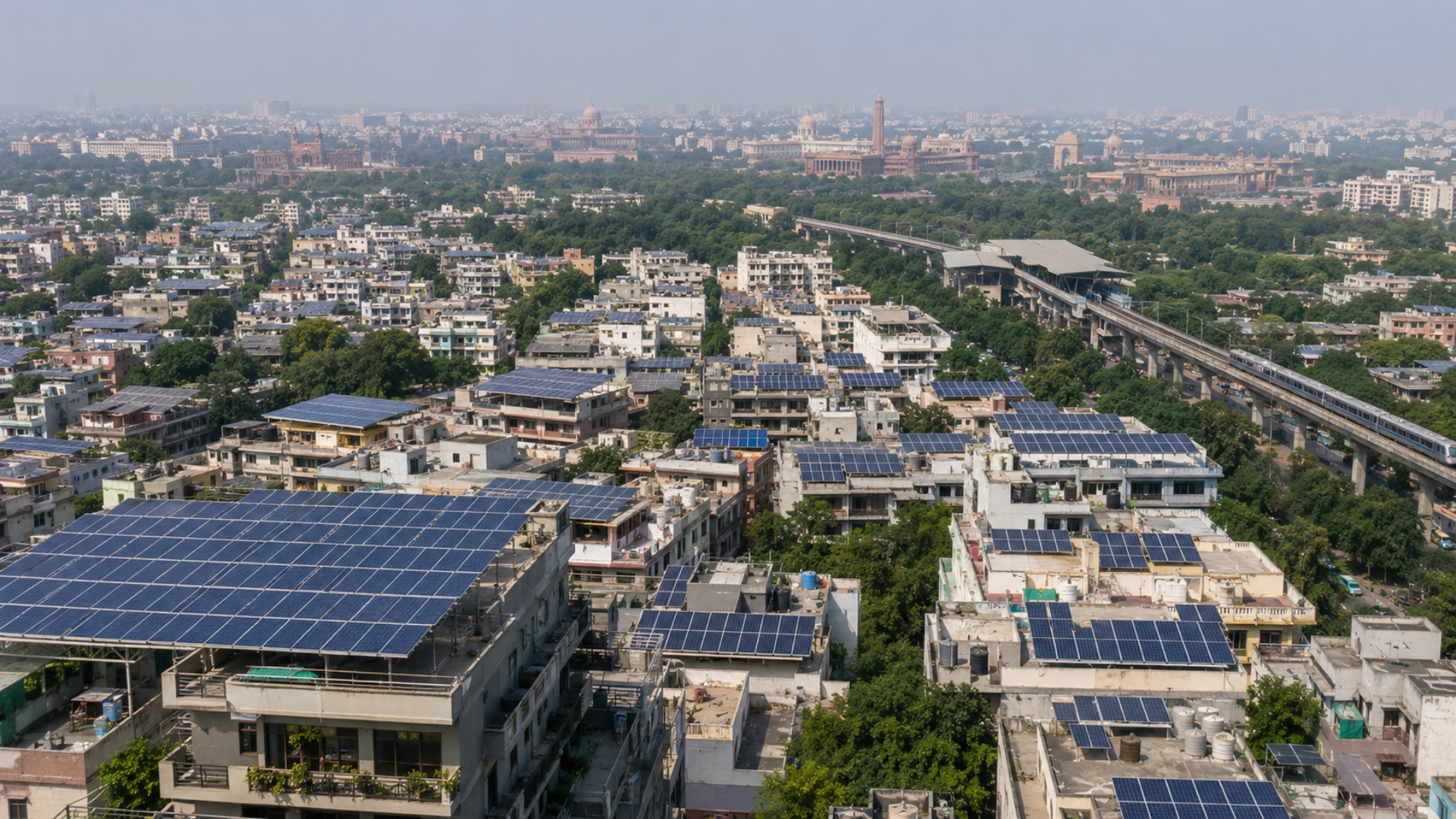
Rooftop solar
Government buildings and institutional campuses with rooftop areas exceeding 500 square metres are proposed to install solar photovoltaic systems in line with Delhi’s solar policy. The plan also encourages major public facilities, including metro stations, railway stations, airports, bus depots and stadiums, to progressively meet their electricity requirements through solar and other renewable energy sources, subject to feasibility.
MPD-2047 further promotes solar-based LED lighting for roads, parks and public spaces, as well as solar-assisted water heating and renewable-energy systems for common building services under the Unified Building Bye-Laws.
Grid upgrades
The master plan proposes phased installation of smart meters by distribution companies (DISCOMs), with differential pricing mechanisms potentially adopted by the Delhi Electricity Regulatory Commission.
It also calls for transmission infrastructure to be planned within the right-of-way of proposed roads, along with the development of new substations and upgrades to existing substations. Power lines are proposed to be laid underground in phases, with land-pooling areas prioritised initially.
EV charging
MPD-2047 links renewable energy expansion with electric mobility. Around 5% of parking areas in existing public buildings with capacity exceeding 100 vehicles are to be earmarked for Electric Vehicle Charging Stations (EVCS).
Urban local bodies and land-owning agencies are also encouraged to identify suitable land parcels for public EV charging and battery-swapping infrastructure.
The plan provides for coordination among the Government of the National Capital Territory of Delhi, the DDA and other local bodies to support renewable energy planning and implementation, while encouraging alternative technologies and approaches to expand power capacity.
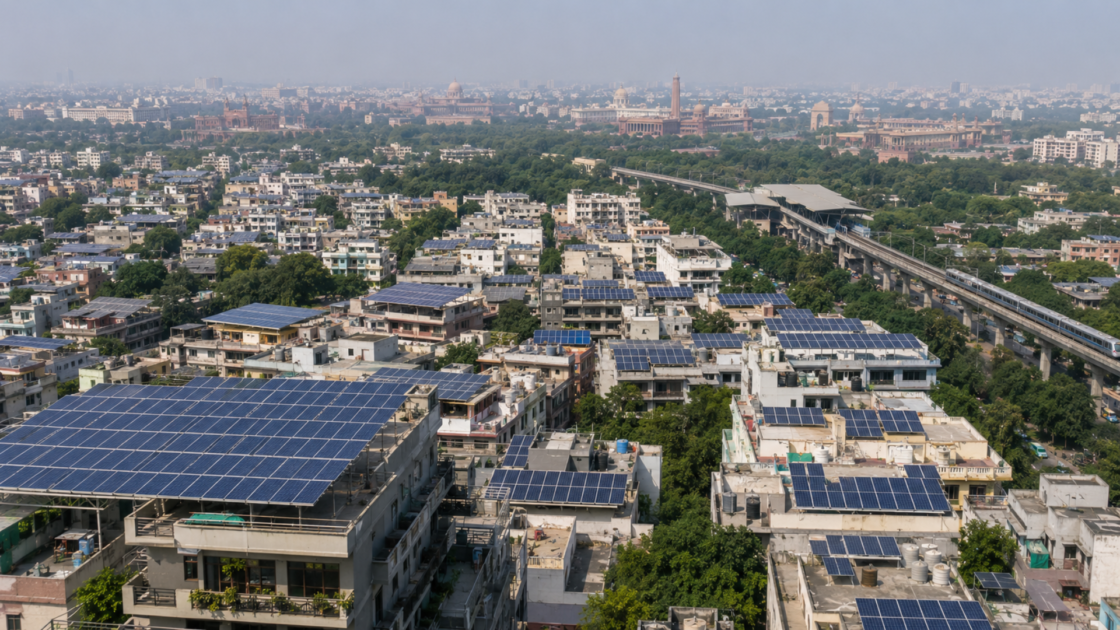
The featured photograph is for representation only.