

UJVNL’s 81 MW Arakot Tiuni hydro project gets EAC ToR nod
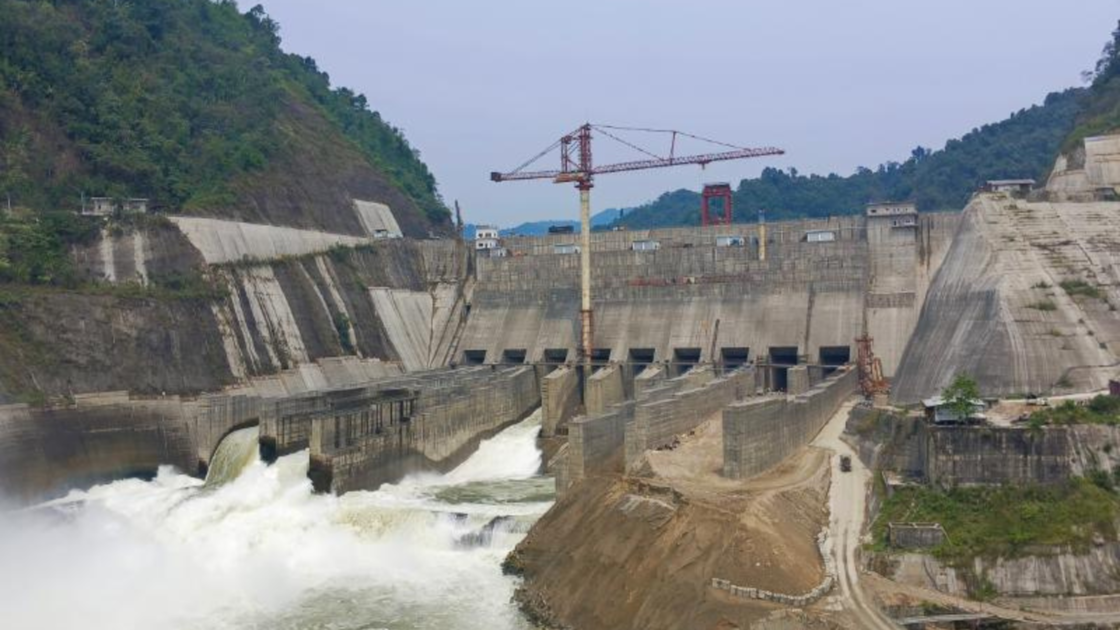
The Expert Appraisal Committee (EAC) for River Valley and Hydroelectric Projects under the Ministry of Environment, Forest and Climate Change (MoEFCC) has recommended Standard Terms of Reference (ToR) for Uttarakhand Jal Vidyut Nigam Limited’s (UJVNL) proposed 81 MW Arakot Tiuni Hydroelectric Project in Uttarkashi district, Uttarakhand.
The Rs 1,211.27 crore run-of-river project will be developed on the Pabar River near Arakot village in Mori tehsil and is designed to generate 318.65 MU annually at 95% machine availability. The project will have three 27 MW units and is expected to take four years to construct, with a levelized tariff of Rs 7.65/unit.
The EAC recommended the ToR on July 15, 2026, subject to additional studies and conditions covering forest clearance, cumulative environmental impacts, muck management, aquatic and terrestrial ecosystems, rehabilitation and watershed development.
Project design
The project envisages a 115.5-metre-long and 16.50-metre-high barrage across the Pabar River, comprising five bays measuring 18.5m x 14.3m each. Water will be conveyed through a 6,951-metre-long, 4.60-metre-diameter horseshoe-shaped Head Race Tunnel (HRT) to a surface pit-type powerhouse measuring 71m x 20m x 38.3m, which will house three 27 MW generating units.
The project requires 65.66 hectares of land, including 7.68 hectares of forest land, 33.56 hectares of government land and 24.42 hectares of private land.
Talra Wildlife Sanctuary is the nearest protected area, located approximately 1.65 km from the nearest project boundary, while its Eco-Sensitive Zone (ESZ) is just 0.01 km away. The proposed barrage is also approximately 0.23 km from the inter-state boundary with Himachal Pradesh, triggering the General Condition requiring appraisal at the Central level.
The project is located in Seismic Zone-IV.
Cascade development
The Arakot Tiuni project forms part of a cascade of hydropower developments in the river system. The commissioned 111 MW Sawra Kuddu Hydro Electric Project in Himachal Pradesh is located upstream, while the proposed 72 MW Tiuni-Plasu Hydro Electric Project on the Tons River is downstream.
The Cumulative Impact Assessment and Carrying Capacity (CIA & CC) Study of the Yamuna River Basin has been completed, with the Arakot Tiuni project recommended in the final report submitted by the Indian Council of Forestry Research and Education (ICFRE). The EAC has stipulated that recommendations from the basin study be incorporated while preparing the project’s Environmental Management Plan (EMP).
Power Potential Studies for the project were vetted by the Central Electricity Authority (CEA) through a letter dated April 16, 2024, while hydrological aspects were finalised by the Hydrology (North) Directorate of the Central Water Commission (CWC) through a letter dated November 3, 2023. Glacial Lake Outburst Flood (GLOF) studies have also received CWC concurrence, while geological aspects have been reviewed by UJVNL’s Geology Wing.
Environmental studies
As part of the ToR conditions, UJVNL will have to obtain Stage-I Forest Clearance for diversion of 7.68 hectares of forest land and prepare an Environmental Cost Benefit Analysis. Baseline environmental data will have to be collected across three seasons, alongside detailed assessment of impacts on aquatic and terrestrial ecosystems.
A watershed development plan covering a 10 km radius must also be prepared in consultation with the Indian Council of Agricultural Research (ICAR) or other expert institutions. The EAC will conduct a site visit before the project is considered for Environmental Clearance (EC).
The project is expected to generate 22.76 lakh cubic metres of muck, of which 15.93 lakh cubic metres will require disposal at designated sites. Muck disposal areas and their approach roads must be located outside forest land, while retaining walls and multi-storied plantation will be required to stabilise disposal sites.
UJVNL must also submit duly approved pre-Detailed Project Report (DPR) chapters covering the Layout Map and Power Potential Studies from CWC and CEA, respectively, and provide an undertaking that no activities have commenced at the project site. Roads widened during construction will have to be restored to narrower widths of up to 10m after construction.
Local impact
Project-affected families will have to be identified and a Rehabilitation & Resettlement (R&R) plan prepared. A public hearing must be conducted in accordance with the Environmental Impact Assessment (EIA) Notification, 2006, and commitments made during the consultation will have to be incorporated into the EIA/EMP report.
The project is expected to employ approximately 1,000 workers during construction. Other proposed benefits include increased vegetal cover through the Catchment Area Treatment Plan and Green Belt Development, along with local development through Corporate Social Responsibility (CSR) initiatives and Watershed Development Plans.
The 81 MW project was transferred to UJVNL from UPDCC under the Irrigation Department by the Government of Uttarakhand through a letter dated May 8, 2020.
The featured photograph (source: NHPC) is for representation only.