
Adani’s 1,800 MW Alleri pumped storage project gets ToR nod in Tamil Nadu
The Expert Appraisal Committee (EAC) for River Valley and Hydroelectric Projects has recommended the terms of reference (ToR) for the proposed 1,800 MW Alleri Closed Loop Pumped Storage Project (PSP) in Tamil Nadu’s Vellore district. The recommendation marks an early stage in the environmental clearance process and will enable the project developer to undertake the environmental studies required for obtaining final environmental clearance.
The proposal was submitted by Adani Hydro Energy Fourteen Limited, a subsidiary of Adani Green Energy Limited.
Project design
The proposed Alleri Closed Loop PSP is planned in Anaicut Taluk of Vellore district. The project involves construction of two new reservoirs, an upper reservoir near Nellimarathukollai and a lower reservoir near Sivanathapuram.
As a closed-loop pumped storage scheme, the project will operate independently of continuous river flows after the initial filling of its reservoirs.
The project has been designed to supply electricity during peak demand for about 6.15 hours per day. It is expected to generate 3,840.09 million units of electricity annually with a cycle efficiency of 79.60%.
The project requires 337.452 hectares of land, of which more than 228 hectares is forest land. The EAC observed that the developer has not yet submitted the Stage-I forest clearance proposal and directed it to initiate the process. The committee also asked the project proponent to further examine options for reducing the forest land requirement.
Water for the initial filling of the reservoirs will be sourced from the Palar River, located about 18 km from the proposed lower reservoir. The project requires a one-time water requirement of 14.34 million cubic metres, while around 1.20 million cubic metres will be needed annually to compensate for evaporation and seepage losses.
The estimated cost of the project is Rs 10,094.03 crore, including interest during construction.
During the construction phase, the project is expected to generate employment for around 1,000 people, while about 55 people are expected to be employed during the operation phase.
Site selection
According to the EAC, no national park, wildlife sanctuary or eco-sensitive zone is located within 10 km of the project site. The nearest protected area, Koundinya Wildlife Sanctuary, is around 30 km away.
The committee also reviewed alternative locations evaluated by the developer before selecting the proposed site. According to the project documents, the selected location offers a higher installed capacity of 1,800 MW compared to 1,500 MW at the alternative sites, avoids resettlement and rehabilitation issues, requires comparatively less forest land in relation to the installed capacity, and allows a more compact water conveyance system.
ToR conditions
While recommending the ToR, the EAC prescribed a number of studies and assessments to be completed as part of the environmental impact assessment process.
These include a water availability and usage study covering a 10 km radius, a compensatory plantation plan to be prepared in consultation with the state forest department, and a certificate from the Chief Wildlife Warden confirming that the project site does not fall within an ecologically sensitive area.
The committee also sought a risk assessment for transportation of construction materials, a cost-benefit analysis covering the loss of forest ecosystem services, an assessment of greenhouse gas emissions over the project’s life cycle, and ecological studies on aquatic biodiversity at the proposed water source.
Following completion of the prescribed studies, the proposal will be considered for environmental clearance by the Ministry of Environment, Forest and Climate Change (MoEFCC).
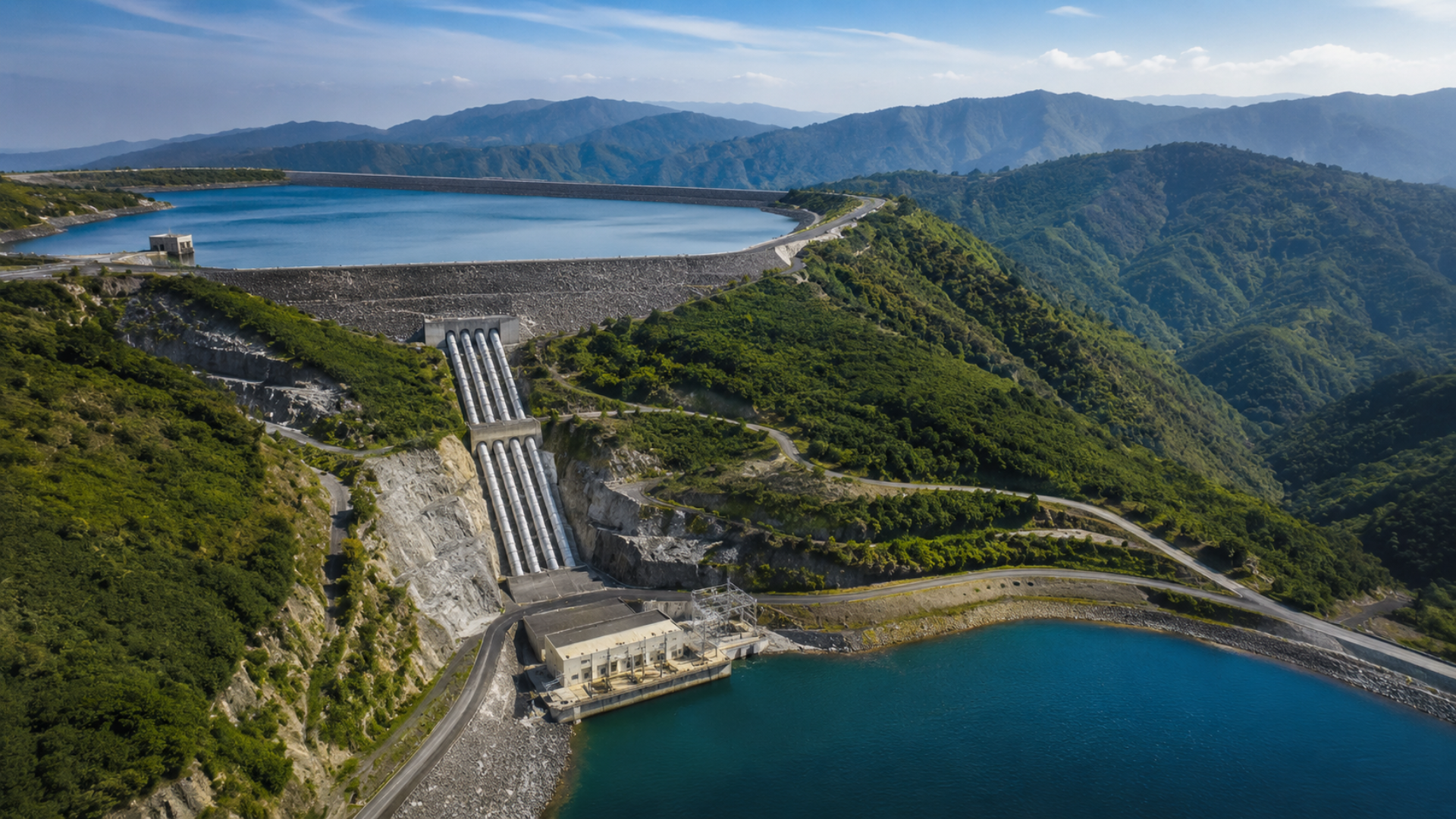
The featured photograph is for representation only.