India formalises long-term resource adequacy framework for power sector
The Central Electricity Authority has released the Long-Term National Resource Adequacy Plan, outlining required generation capacity, sources, and timelines to maintain a reliable supply through 2035-36. Covering 2026-27 to 2035-36, the plan sets a framework for capacity expansion, storage deployment, and state-level planning.
Current base
As of January 31, 2026, India’s installed generation capacity stood at 520.5 GW, of which 52% came from non-fossil sources. This marks a clear shift from the position a few years ago, when renewables accounted for a smaller share of capacity. Between April 2025 and January 2026, India added 52,537 MW of new capacity, including 43,027 MW from renewables, the highest annual addition recorded so far.
Solar photovoltaic capacity reached 140.6 GW by January 2026, up from about 105 GW nine months earlier. Wind capacity stood at 54.7 GW, large hydro at 51.2 GW, and coal at 227.8 GW. Even with this renewable growth, coal continued to account for about 69% of total electricity generation in 2025-26 up to January 2026. The difference between installed capacity share and actual generation share reflects the variable output of solar and wind, which the plan addresses in depth.
Peak electricity demand reached 249.86 GW in 2024-25, although demand in 2025-26 remained below earlier projections, reaching 245.44 GW through January 2026 against a forecast of 270 GW. The Central Electricity Authority has reflected this softer demand trend in an alternate scenario. The main scenario, however, assumes peak demand will grow at a compound annual rate of 5.58% through 2035-36 to reach 459 GW, while annual energy requirement rises to 3,365 billion units from about 1,694 billion units in 2024-25.
2035-36 mix
Under the main demand scenario, India will need 1,121 GW of installed generation capacity by 2035-36. The projected composition shows the direction of the power mix over the coming decade.
Solar photovoltaic accounts for 509 GW, nearly 45% of the total. Wind is projected at 155 GW, while large hydro reaches 78 GW. Coal capacity increases more gradually to 315 GW, and its share in total installed capacity declines from 44% at present to 28% by 2035-36. Gas-based capacity remains at 20 GW, with no major additions planned because of domestic fuel constraints. Nuclear capacity rises from 8.78 GW to 22 GW by 2035-36, remaining limited in overall share but relevant as a source of carbon-free baseload power.
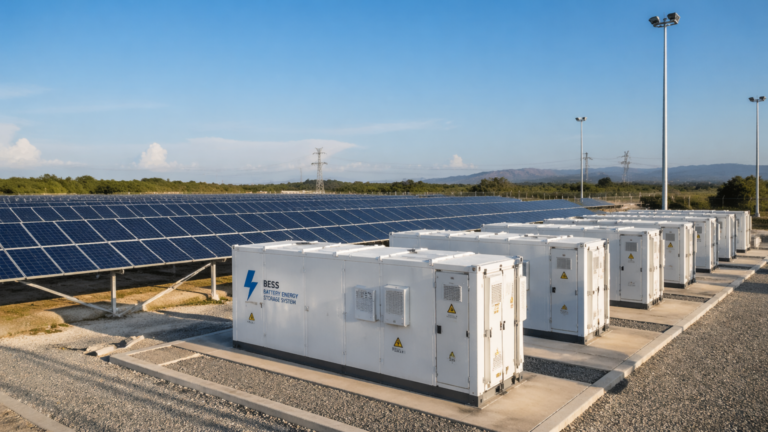
The plan also projects 174 GW of energy storage by 2035-36, including 94 GW of pumped storage projects and 80 GW of battery energy storage systems, with combined energy capacity of 888 GWh. This is one of the most significant elements of the plan because storage is treated as a core system requirement rather than a supplementary option.
Non-fossil installed capacity is projected to increase from 272 GW in January 2026 to 786 GW by 2035-36, taking its share to 70% of total installed capacity. In generation terms, the shift is slower. Coal’s share in electricity generation declines from around 64% in 2026-27 to about 49% by 2035-36, while solar photovoltaic rises to 27% and wind to 9%. Fossil fuels therefore continue to supply about half of total electricity generation by the end of the period, reflecting the continuing role of coal in meeting evening and overnight demand.
Storage
The emphasis on storage follows directly from the scale of renewable integration envisaged in the plan. With more than 500 GW of variable renewable capacity in the system, storage is required to support reliability during non-solar hours and during peak demand periods.
The analysis shows that storage systems with six hours or more duration can provide their full rated capacity during peak demand periods. Shorter-duration systems contribute less in proportion to their discharge duration. For battery energy storage systems, a six-hour system is assigned a full capacity credit of 1.0, while a four-hour system receives about 0.67. Pumped storage plants are assigned a maximum capacity credit of 0.95 for six-hour systems to account for maintenance and auxiliary consumption.
The plan places greater weight on pumped storage for long-duration applications. Pumped storage projects provide physical inertia through rotating machines, which becomes more valuable as the share of thermal generation declines. They also rely largely on domestic technology and are seen as aligned with domestic manufacturing and energy security objectives. The Central Electricity Authority had separately issued a roadmap in January 2026 targeting 100 GW of pumped storage by 2035-36, supported by faster clearances, budgetary support, and incentives for private sector participation.
Battery energy storage systems are positioned to serve shorter-duration requirements and are becoming more cost-competitive. Capital costs are assumed to decline from Rs 5 crore per MW in 2025-26 to Rs 3.6 crore per MW by 2035-36. At the same time, the plan notes a structural supply risk. India imports 75-80% of its lithium-ion cells, which account for around 80% of battery system costs, and more than 75% of global battery manufacturing is concentrated in one Asian country. The plan notes that actual battery deployment will depend on future costs as well as operational characteristics such as depth of discharge, round-trip efficiency, and degradation rates, compared with pumped storage economics.
Near-term gap
One of the more immediate findings in the plan relates to the period up to 2029-30. Under the main demand scenario, Planning Reserve Margin values during non-solar hours are projected to remain negative from 2026-27 to 2028-29. A negative Planning Reserve Margin indicates that available firm capacity falls below projected peak demand during evening and night hours, when solar generation is unavailable.
The Central Electricity Authority recommends a set of near-term measures. These include deferring planned maintenance of thermal plants during likely peak demand periods, particularly in summer, accelerating the return of units under maintenance or overhaul, ensuring timely commissioning of projects near completion, and speeding up deployment of storage systems to support non-solar peak demand. Under the alternate demand scenario, which assumes demand growth lags the main scenario by about one year, non-solar Planning Reserve Margin remains positive through the study period. Even so, the planning framework expects states to prepare for the tighter scenario.
State obligations
The plan also introduces state-level coincident peak obligations tied to procurement requirements. Coincident peak refers to each state’s share of national demand during the top 5% of all-India demand hours, separated into solar and non-solar periods. This defines the level of capacity that each distribution licensee needs to contract in order to remain resource-adequate.
For 2026-27, six states account for around half of the coincident peak during solar hours: Maharashtra, Uttar Pradesh, Gujarat, Rajasthan, Madhya Pradesh, and Karnataka. Maharashtra has the highest share at 12%. During non-solar hours, Uttar Pradesh leads at 12%, followed by Maharashtra, Gujarat, Tamil Nadu, Rajasthan, and Madhya Pradesh.
Distribution licensees are required to demonstrate 100% capacity tie-up for the first year and at least 90% for the second year against their coincident peak requirement. Long-term power purchase agreements are expected to cover 75-80% of the total supply-side adequacy requirement, medium-term contracts 10-20%, and short-term contracts the balance. Purchases in the day-ahead market through power exchanges do not count towards resource adequacy compliance.
Reliability
The Central Electricity Authority used two modelling platforms for the study: the ORDENA optimisation tool and its in-house STELLAR platform, or Strategic Expansion for Long-Term Load Adequacy and Resilience. These were used for generation expansion planning, production cost analysis, and Monte Carlo reliability simulations. The use of STELLAR marks a step in building domestic planning capability for long-term adequacy assessment.
For 2035-36, Monte Carlo simulations across 100 sample runs showed that 77 samples produced a Loss of Load Probability below 0.2%, which is within the prescribed reliability threshold. The average Loss of Load Probability across all samples was 0.18%, while average Normalised Energy Not Served stood at 0.01%, both within the limits set under the Resource Adequacy Guidelines. Peak non-solar Planning Reserve Margin is projected at about 13-14% by 2035-36 in the main scenario, with higher margins under the lower-demand alternate case.
Coal and nuclear
The plan takes a direct view of coal’s continuing role. Despite rapid growth in renewable capacity, coal-fired plants are projected to operate at plant load factors of 62-65% through the decade. This indicates continued utilisation even as coal’s share in the generation mix declines gradually. The studies assume a minimum technical operating limit of 55% for coal plants. The plan also points to the need for incentive mechanisms to lower this floor further so that coal plants can operate more flexibly alongside variable renewable generation without affecting asset life.
The document also refers to the government’s Nuclear Energy Mission, which targets 100 GW of nuclear capacity by 2047, up from 8.78 GW at present. It notes the need for amendments to the Atomic Energy Act and the Civil Liability for Nuclear Damage Act to enable private and foreign participation, and refers to a target of five domestically developed small modular reactors by 2033. Even so, nuclear additions within the 2035-36 horizon remain limited because of long construction timelines.
Next steps
The Long-Term National Resource Adequacy Plan is intended as a national framework that now has to be translated into utility and state-level action. Each distribution licensee is required to prepare its own Long-Term Distribution Licensee Resource Adequacy Plan with reference to the national plan and submit it to the Central Electricity Authority by September each year. In states with multiple distribution utilities, the state load dispatch centre is expected to determine and enforce the share of each utility in the state’s coincident peak obligation.
The plan will be updated annually, reflecting the pace of change in India’s power sector. Demand growth, renewable additions, storage costs, and thermal plant availability are all likely to shift over time. What this document establishes is a structured and data-based planning process for tracking those changes and adjusting capacity decisions accordingly.
The scale of the requirement is substantial. Over a decade, India will need to almost triple installed capacity, build 174 GW of storage from a limited base, and maintain grid reliability across all hours. The plan does not by itself ensure delivery, but it sets out the capacity pathway, reliability benchmarks, and procurement obligations with greater clarity than earlier planning exercises.
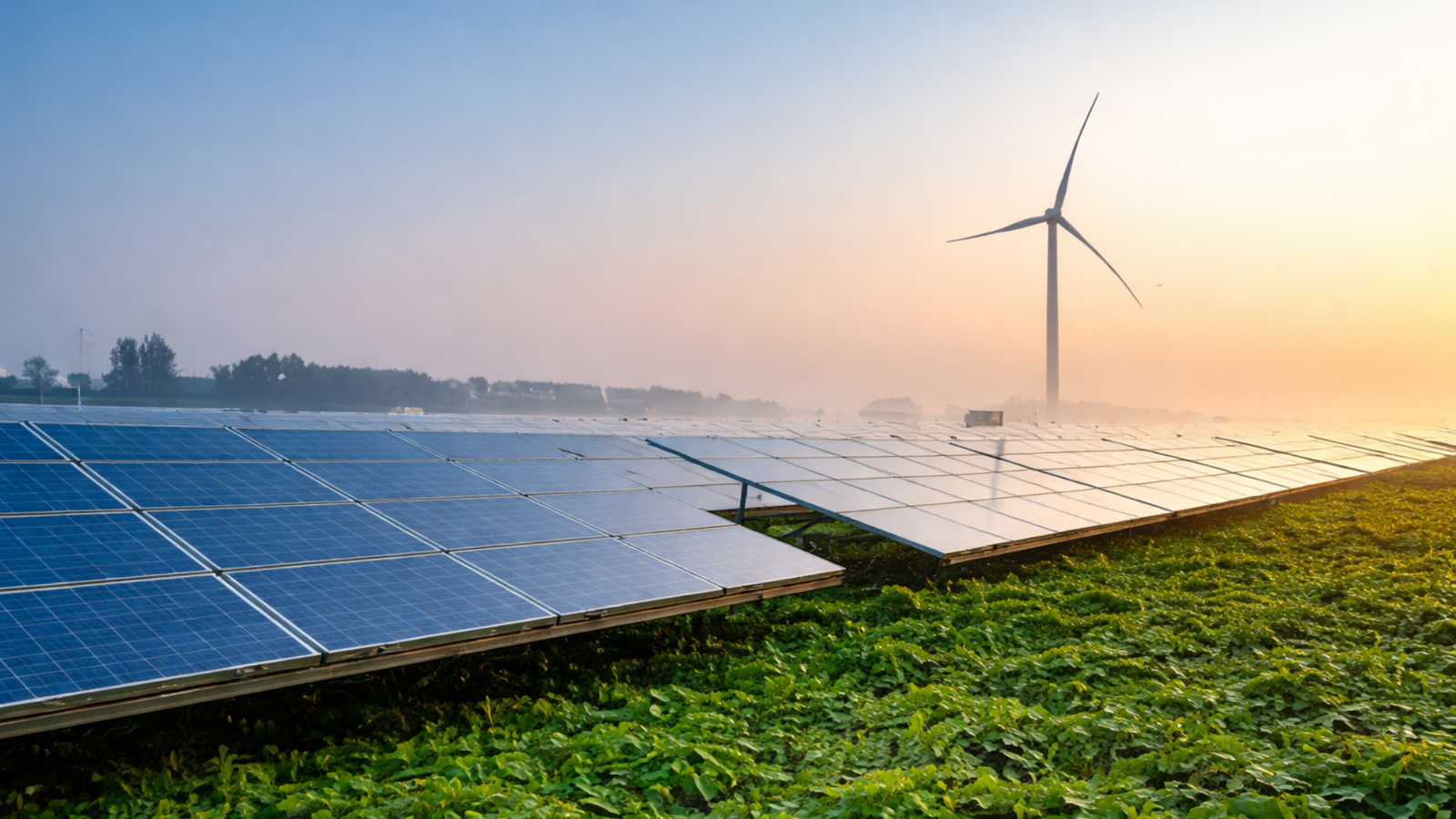
The featured photograph is for representation only.