Solar schemes for farmers in India: PM KUSUM, rooftop solar and agrivoltaics explained
India is expanding solar deployment in agriculture through programmes such as the Pradhan Mantri Kisan Urja Suraksha Evam Utthaan Mahabhiyan (PM KUSUM) and the PM Surya Ghar Muft Bijli Yojana. These schemes support solar irrigation pumps, decentralised solar power plants, and residential rooftop installations that can reduce electricity costs for rural households.
Speaking at the 4th National Agro-RE Summit in New Delhi on March 10, 2026, Union Minister for New and Renewable Energy Pralhad Joshi stated that diesel irrigation costs farmers nearly Rs 6,790 per acre for wheat and more than Rs 8,000 per acre for crops such as cotton. Solar pumps can reduce irrigation costs by about Rs 5,000–6,500 per acre annually while also lowering emissions.
PM KUSUM scheme
Overview
The PM KUSUM was launched in March 2019 to provide energy and water security to farmers while reducing diesel consumption in agriculture.
The programme aims to add approximately 34,800 MW of solar capacity by March 2026, supported by a central financial allocation of Rs 34,422 crore. The scheme also reflects a broader policy shift in which farmers are increasingly seen not only as food producers but also as potential producers of renewable electricity.
PM KUSUM components
Component A: Decentralised solar power plants
Component A supports renewable energy power plants with capacities ranging from 500 kW to 2 MW. Eligible participants include individual farmers, farmer groups, cooperatives, panchayats, Farmer Producer Organisations (FPOs), and Water User Associations (WUAs).
Electricity generated by these plants is purchased by distribution companies (DISCOMs) at tariffs determined by the relevant State Electricity Regulatory Commission. To ensure grid connectivity, the project land must be located within five kilometres of a 33/11 kV grid substation, which is the technical standard used for agricultural feeder connectivity in most Indian states.
Farmers developing projects under this component sign a power purchase agreement with the DISCOM, typically for a period of up to 25 years. DISCOMs receive a procurement-based incentive of 40 paise per kilowatt-hour or Rs 6.60 lakh per MW annually, whichever is lower, for the first five years of operation.
This component generally suits farmers who have unused or barren land located close to substations and want to generate long-term income through electricity sales.
Farmers do not necessarily have to invest directly in constructing the solar plant. Under a developer or land lease model, the farmer leases suitable land to a solar developer who finances, builds, and operates the plant.
In such arrangements, the developer manages project financing, installation, grid connection, and long-term maintenance. The farmer receives a fixed land lease payment, typically paid annually or monthly for the duration of the project.
This model involves no upfront investment from the farmer and provides a predictable rental income stream. It is often preferred when farmers do not have access to project finance or do not wish to manage power generation assets.
By contrast, farmers who develop the plant themselves retain full control of the project and receive revenue directly from electricity sales under the power purchase agreement. While this approach may provide higher returns over the long term, it also requires capital investment and ongoing project management. The lease model, therefore, becomes more attractive when a farmer has suitable land but prefers a lower-risk and simpler income arrangement.
Component B: Standalone solar irrigation pumps
Component B supports the installation of standalone solar irrigation pumps of up to 7.5 horsepower (HP) in areas where grid supply is unavailable or unreliable.
Under the scheme, the Central Financial Assistance covers 30% of the benchmark cost or tender cost, whichever is lower. State governments provide at least 30% subsidy. The remaining share may be financed through bank loans, which can reduce the farmer’s upfront payment to about 10% of the total cost.
In certain regions, including the North Eastern states, Sikkim, Jammu and Kashmir, Himachal Pradesh, Uttarakhand, Lakshadweep, and the Andaman and Nicobar Islands, the central subsidy increases to 50%.
For example, in Assam a 2 HP DC submersible pump with a total cost of Rs 1,71,857 results in a farmer contribution of about Rs 23,749 under the state funding pattern. This component is therefore particularly useful for farmers in off-grid locations who require reliable daytime irrigation without depending on diesel.
Component C: Solarisation of grid-connected pumps
Component C supports the solarisation of existing grid-connected agricultural pumps. Farmers can install solar photovoltaic capacity up to twice the rated capacity of their pump in kilowatts.
Electricity generated by the solar installation first powers the irrigation pump, while any surplus electricity can be exported to the grid. The subsidy structure mirrors that of Component B, with the central government providing 30% Central Financial Assistance and the state government contributing at least 30%.
Recent deployment under this component has increased compared with earlier years. This option benefits farmers who already have grid-connected pumps and wish to eliminate electricity bills while generating additional income from surplus electricity sales.
Scheme implementation
PM KUSUM has seen significant expansion since its launch. More than 10 lakh standalone solar agricultural pumps have been installed across the country, while solarisation of grid-connected pumps remains under implementation across states.
Financial expenditure under the programme increased significantly in FY 2024-25 compared with the previous year, with Maharashtra emerging as one of the largest beneficiary states during that period.
Eligibility
Eligible applicants under PM KUSUM include individual farmers owning agricultural land, groups of farmers, cooperatives, Farmer-Producer Organisations, panchayats, and Water User Associations. Priority is generally given to small and marginal farmers, and additional preference may be extended to farmers using micro-irrigation systems.
Component-specific conditions apply. For Component A projects, the land must be located within five kilometres of a 33/11 kV substation to ensure grid connectivity. Component B applies primarily to off-grid or underserved areas, while Component C applies to farmers who already operate grid-connected irrigation pumps.
Farmers considering Component A projects should also verify local land-use regulations before applying. In some states, high-yield or multi-crop agricultural land may require conversion to non-agricultural status before a solar plant can be installed. Land classification and conversion procedures vary across states, and farmers are advised to confirm the applicable rules with the district agricultural office or the local tehsildar before proceeding with the project.
Cost sharing
Under Component A, Central Financial Assistance is provided up to 30%, with the state contributing at least 30%, and the remaining amount typically financed through bank loans, resulting in about 10% upfront contribution from the farmer. For Component B, the central subsidy is 30%, or 50% in North Eastern and hilly states, with at least 30% from the state and the balance through loans, leaving about 10% upfront for the farmer. Component C follows a similar structure with 30% central assistance, at least 30% state subsidy, and the remaining through loans.
In some states and revised guidelines, higher pump capacities, including up to 15 HP, have been permitted under specific conditions.
Application process
Applications are submitted through the national portal at pmkusum.mnre.gov.in. Farmers first identify the implementing agency responsible for the scheme in their state. For example, farmers in Maharashtra apply through the Maharashtra Energy Development Agency (MEDA), while farmers in Uttar Pradesh apply through the Uttar Pradesh New and Renewable Energy Development Agency (UPNEDA).
Applicants select the relevant component of the scheme, submit their application details, and upload the required documents. After submission, the implementing agency conducts a site inspection to verify land ownership, grid proximity, and installation feasibility.
Once the project is approved, a sanction letter specifying the approved system size and subsidy amount is issued. Farmers then select an empanelled installer approved by the state nodal agency. After installation and inspection, the system is commissioned and subsidy payments are released according to scheme milestones.
For Components A and C, surplus electricity exported to the grid is credited at tariffs determined by the State Electricity Regulatory Commission.
Documents required
Farmers applying for the scheme generally need to provide the following documents: Aadhaar card, land ownership records, bank account passbook, passport-size photographs, mobile number linked to Aadhaar, electricity consumer number for Component C, land details near a substation for Component A, caste certificate where applicable, and a no-objection certificate for jointly owned land.
PM KUSUM 2.0 and agrivoltaics
The government is preparing a new phase of the programme that is expected to include agrivoltaic systems.
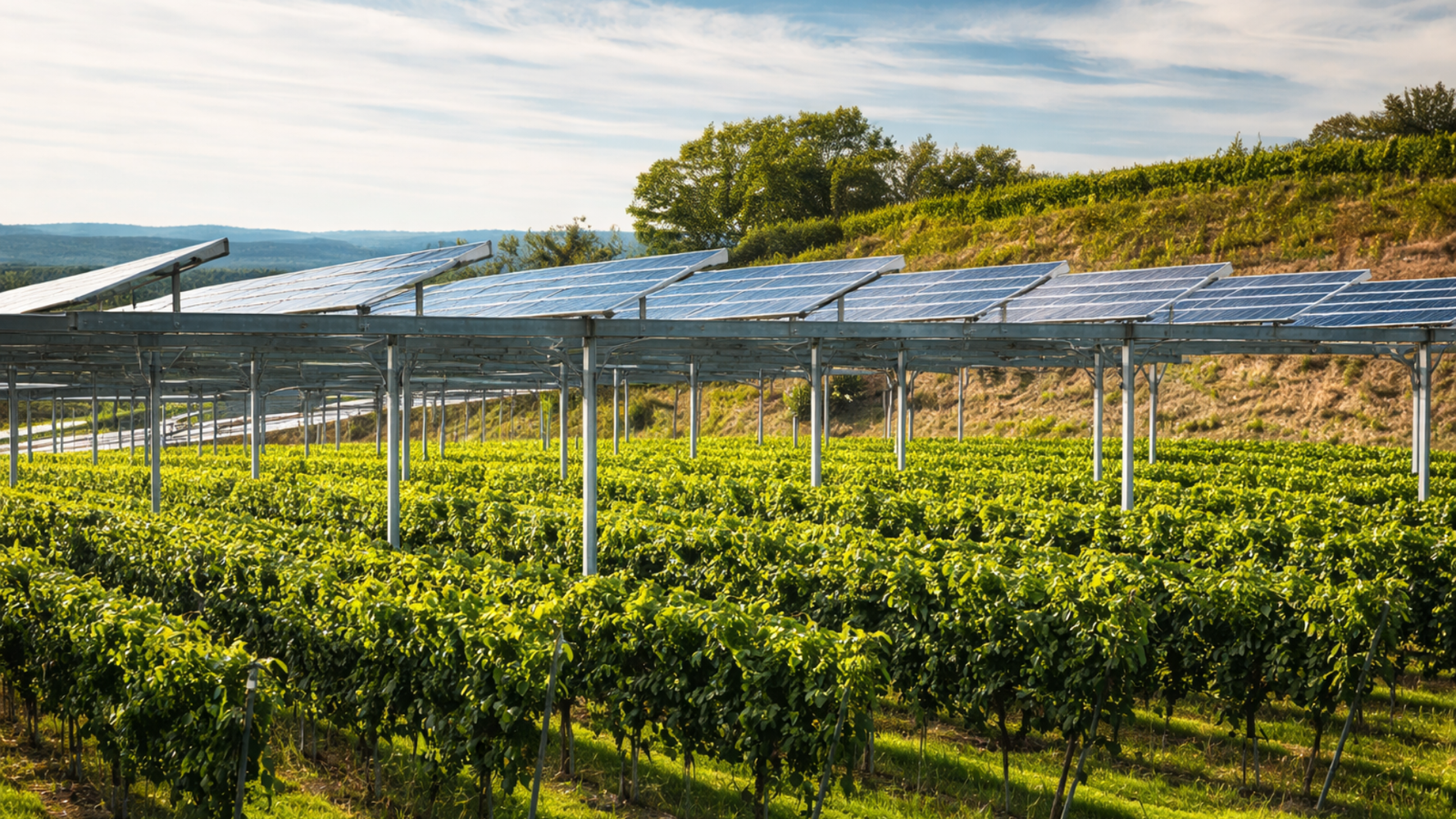
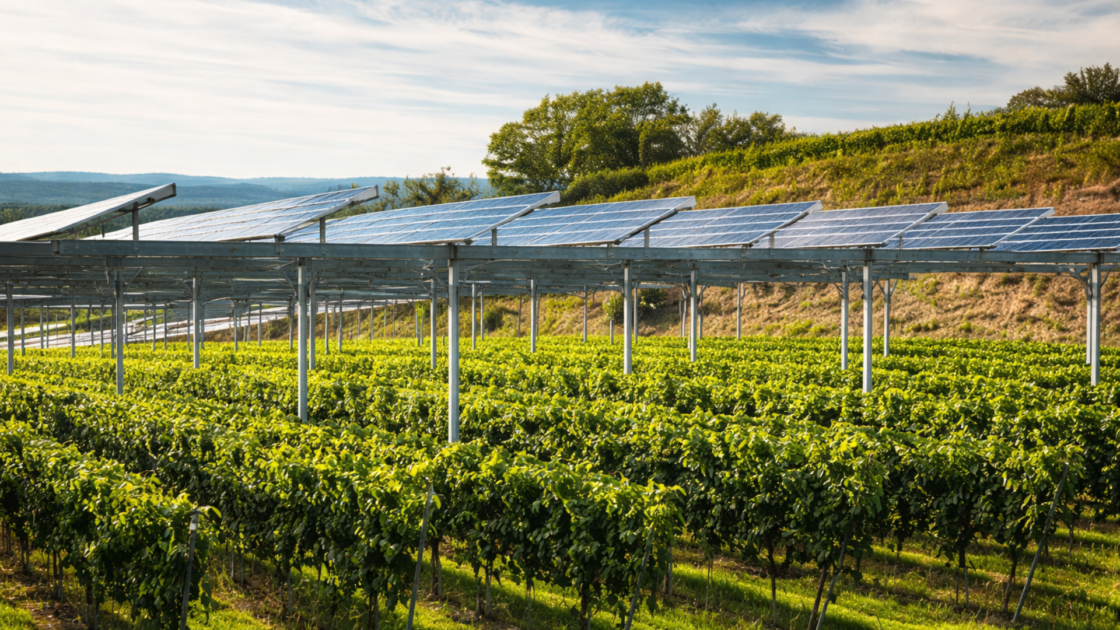
At the March 10, 2026 summit, the Union Minister stated that the proposed PM KUSUM 2.0 may include a dedicated agrivoltaic component. Agrivoltaic systems involve installing solar panels on elevated structures above farmland so that crops can continue to grow beneath them.
This approach allows farmers to generate electricity while maintaining agricultural production. According to estimates cited at the summit, India’s agrivoltaic potential could range between 3,000 GW and nearly 14,000 GW.
Research studies suggest that combining crop cultivation with solar electricity generation could increase farm incomes from around Rs 60,000 per acre to more than Rs 1 lakh per acre annually in certain cases. As of March 2026, detailed operational guidelines for PM KUSUM 2.0 have not yet been released.
State programmes
Maharashtra
Maharashtra has received the largest allocation under PM KUSUM. The state government has allocated Rs 15,000 crore under the Magel Tyala Saur Krushi Pump Yojana to supply solar pumps to about 8.5 lakh farmers.
Under this scheme, farmers generally pay about 10% of the pump cost, while Scheduled Caste and Scheduled Tribe beneficiaries may pay about 5%. Maharashtra also operates the Mukhyamantri Saur Krishi Vahini Yojana 2.0, which supports decentralised solar projects between 0.5 MW and 25 MW near agricultural substations with a target capacity of 7,000 MW.
Another programme, the Mukhya Mantri Baliraja Vij Savlat Yojana, allocates Rs 14,761 crore to provide free electricity for agricultural pumps up to 7.5 HP.
Karnataka
Karnataka’s Surya Raitha Scheme supports replacement of diesel and electric irrigation pumps with solar systems. Combined central and state subsidies cover up to 70% of the system cost, while the remaining amount is financed through soft loans repaid through electricity exports.
Under the scheme, power purchase agreements are typically signed for 25 years and loans are repaid over a period of about 12–14 years. Implementation is handled through Bangalore Electricity Supply Company Limited (BESCOM) and Karnataka Renewable Energy Development Limited (KREDL).
Rajasthan
Rajasthan allocated Rs 400.16 crore in its budget to install solar pumps under PM KUSUM Component B. The state also provides rooftop solar subsidies of 40% for systems up to 3 kilowatts and 20% for systems between 3 kilowatts and 10 kilowatts.
Chhattisgarh
Chhattisgarh allocated Rs 3,500 crore to provide free electricity for agricultural pumps with capacities of up to 5 HP. Farmers apply for PM KUSUM installations through the Chhattisgarh State Power Distribution Company Limited.
PM Surya Ghar Muft Bijli Yojana
PM Surya Ghar Muft Bijli Yojana supports residential rooftop solar installations. The programme provides up to 300 units of free electricity per month for households, while installation subsidies can reach Rs 78,000 and are transferred directly to beneficiaries’ bank accounts.
Central Financial Assistance has been disbursed to households under the scheme, with the average subsidy amount close to Rs 78,000 per household.
As of early 2026, rooftop solar installations under the scheme have expanded rapidly, with the government aiming to extend the programme to one crore households by March 2027. Collateral-free loans are available at interest rates of around 7% for systems up to 3 kW.
Subsidy structure
For systems up to 2 kW, the central subsidy is Rs 30,000 per kW. For systems between 2 kW and 3 kW, the subsidy is Rs 60,000 plus Rs 18,000. For systems above 3 kW, the subsidy is capped at Rs 78,000.
Renewable energy context
India’s renewable energy strategy increasingly emphasises decentralised installations. Programmes such as PM KUSUM and PM Surya Ghar integrate electricity generation directly into farms and rural households. The proposed agrivoltaic component under PM KUSUM 2.0 extends this approach further by combining solar electricity generation with agricultural land use.