
Variation in rooftop solar regulations across Indian states: a framework comparison

India does not have a single rooftop solar regime. While the Ministry of New and Renewable Energy and the Forum of Regulators have issued model guidelines, implementation is a state subject, and the variation across jurisdictions is substantial. As of February 2026, the following is a comparative account of how key regulatory parameters differ.
Metering Mechanisms Available
Most states offer net metering as the base mechanism, but the suite of options varies widely. Several states offer multiple arrangements such as net metering, gross metering, net billing (also referred to as net feed-in), group net metering, and virtual net metering. Others provide a narrower set, often limited to net metering and gross metering. In a few jurisdictions, certain mechanisms remain under draft or evolving regulatory provisions.
Capacity Limits
The upper limit for net metering varies widely across states. In some jurisdictions it is restricted to small residential systems of around 10 kW, while others allow installations of 1 MW or more. Andhra Pradesh caps net metering at 500 kW. Maharashtra and Karnataka allow net metering up to 500 kW for most consumer categories. Kerala permits net metering up to 500 kW while also allowing higher capacities under other arrangements. Gujarat allows net metering up to 1,000 kW with no restriction on consumer load category. Uttar Pradesh allows net metering up to 2 MW, while West Bengal permits installations up to 500 kW.
For gross metering, which involves selling all generated power to the distribution licensee, limits are generally higher. Tamil Nadu allows gross metering up to 3,000 kW, while Maharashtra permits capacities up to 5 MW in certain categories.
Settlement Period
This is one of the most consequential parameters for consumers. Annual settlement, where exported energy units are accumulated over a financial year before monetary payment is made, is the most common approach. States following this include Bihar, Karnataka, Kerala, Maharashtra, Rajasthan, Uttar Pradesh, and West Bengal.
Monthly or billing-cycle settlement also exists in some states depending on the metering arrangement. For example, Gujarat aligns settlement with the billing cycle, while Andhra Pradesh uses monthly accounting with annual payment under certain mechanisms. Tamil Nadu and Tripura settle quarterly in specific categories. Himachal Pradesh follows an annual cycle beginning March 16 each year rather than April 1, a state-specific variation.
Settlement Rate for Surplus Generation
What a prosumer receives for energy exported beyond their own consumption varies significantly and has direct bearing on the economics of rooftop solar investment.
Andhra Pradesh pays a fixed feed-in tariff of Rs 2.09 per unit for net metering and Rs 3.13 per unit for LT gross metering. Gujarat pays Rs 2.25 per unit for the first five years, after which 75% of the average bidding tariff applies. Himachal Pradesh pays domestic consumers 30% of the weighted average rate of ground-mounted solar plants. Non-domestic consumers receive zero payment on surplus units, which is among the more restrictive positions in the country.
Karnataka settles surplus energy based on the lowest solar or wind tariff discovered in the preceding financial year. Kerala pays at the Feed-in Tariff determined by the Commission, with 2% banking charges applicable. Maharashtra settles unadjusted units at the Average Power Purchase Cost (APPC) or Feed-in Tariff (FiT), whichever is lower. Punjab pays a weighted average renewable energy tariff plus 25% for domestic net metering and plus 40% for net billing. Rajasthan pays at the lowest solar power purchase agreement (PPA) or power sale agreement (PSA) tariff from the preceding year. Uttar Pradesh pays Rs 2.00 per kWh under net metering.
Some states, including West Bengal and Mizoram, specify that surplus units lapse at the end of the settlement period with no payment, making system sizing relative to consumption particularly important for consumers in those states.
Distribution Transformer Hosting Limits
Most states cap cumulative rooftop solar capacity connected to a distribution transformer at around 80% of the transformer’s rated capacity. Some states impose stricter limits: Himachal Pradesh caps it at 30%, Haryana at 50%, and Meghalaya at 75%. Conversely, Bihar, Jharkhand, Ladakh, and a few others allow installations up to 100% of DT capacity. Tamil Nadu imposes a tighter 30% per-phase limit within its overall DT cap.
Deemed Approval
Most states provide deemed approval for rooftop solar systems up to 10 kW, consistent with the framework used under the PM Surya Ghar scheme. For larger systems, feasibility study timelines typically range from a few days in some states to around 15–30 days in others.
Charges and Exemptions
Most states exempt rooftop solar prosumers from wheeling charges, cross-subsidy surcharge, banking charges, and additional surcharge, at least where generation and consumption occur within the same distribution area. Karnataka exempts charges where injection and withdrawal occur within the same distribution transformer or 11 kV feeder. Maharashtra levies grid support charges of 50 paise per kWh for the first 300 units and Re 1 per kWh beyond that. Punjab requires an electrical licence for rooftop solar installation, one of the few states to do so.
Electrical Licence Requirement
Punjab stands out among major states reviewed here as requiring an electrical licence for rooftop solar installation. Most other states waive this requirement.
Key Takeaways
The patchwork of state-level frameworks creates an uneven playing field for rooftop solar adoption. A commercial consumer in Gujarat faces fewer constraints, broader capacity eligibility, and more transparent settlement terms than a similar consumer in Himachal Pradesh, where distribution transformer limits are tight and non-domestic surplus earns nothing. The settlement rate methodology — whether fixed FiT, APPC-linked, or tariff-discovery linked — also introduces year-on-year variability in states that peg payments to discovered tariffs.
Standardisation across states remains incomplete despite central model guidelines, and the divergence is most pronounced in settlement rates, distribution transformer hosting limits, and the availability of group and virtual net metering arrangements.
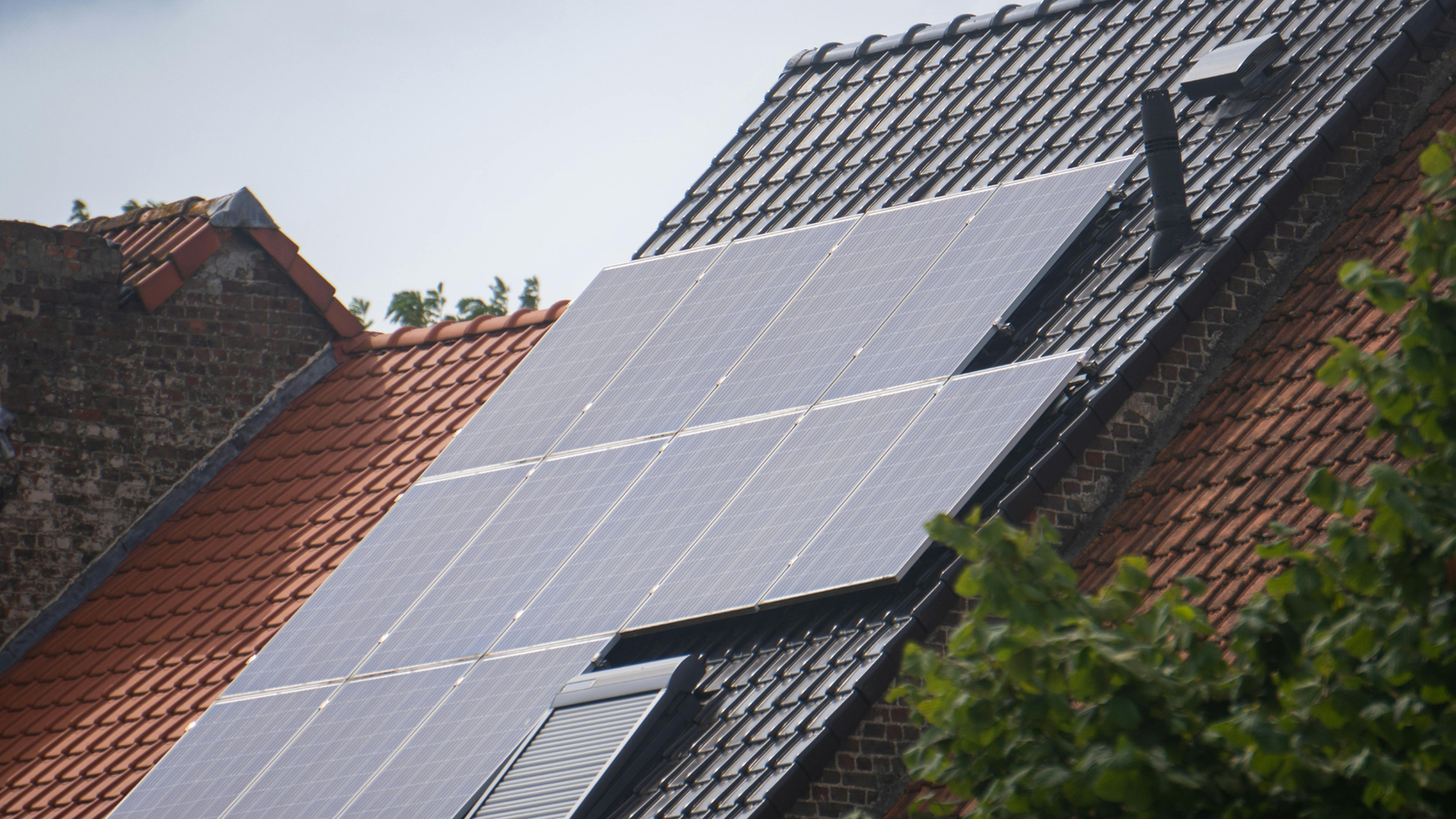
The featured photograph is for representation only.