MNRE begins consultations on floating solar policy and potential assessment
The Ministry of New and Renewable Energy (MNRE) has started consultations with states and union territories on draft documents intended to accelerate the development of floating solar photovoltaic (FSPV) projects in India. The initiative aims to address land availability constraints that have limited commissioned floating solar capacity in the country to about 700 MW so far.
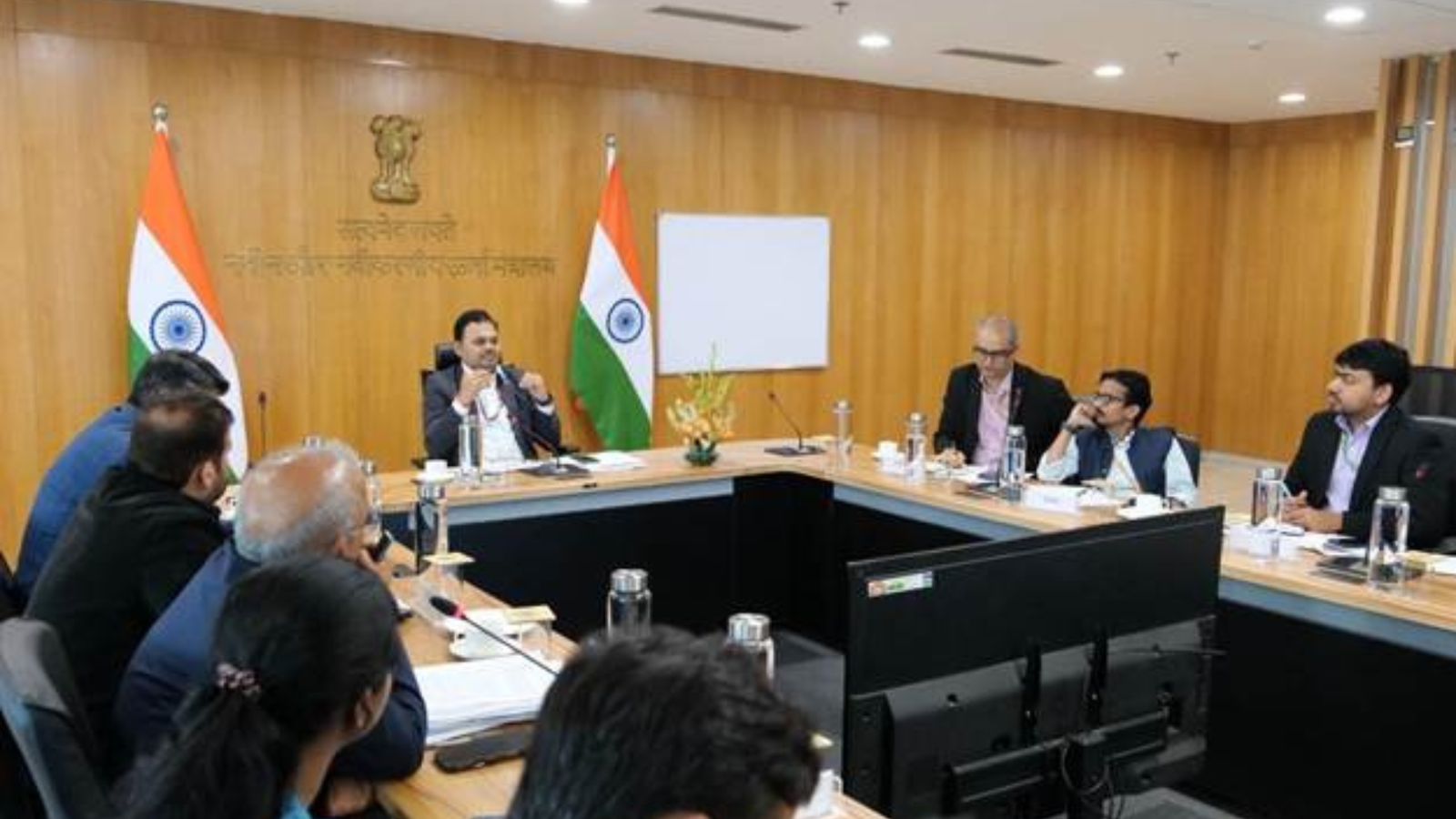
A stakeholder consultation workshop was held under the chairmanship of Joint Secretary J.V.N. Subramanyam. The meeting reviewed the draft FSPV Potential Assessment Report prepared by the National Institute of Solar Energy (NISE) and a draft floating solar policy developed by the Indian Institute of Technology Roorkee (IIT Roorkee).
The consultation brought together government agencies and sector stakeholders to discuss the two documents. According to MNRE, the drafts seek to address the lack of reliable data on potential sites and the absence of a structured implementation framework, both identified as key factors slowing the adoption of floating solar projects in India.
Following the workshop, MNRE has asked states and union territories to hold internal consultations with relevant departments, including Water Resources, Irrigation, Revenue, Fisheries, Forest, Agriculture, distribution companies (DISCOMs), transmission companies (Transcom), Public Works, Tourism and Pollution Control authorities. States have been requested to provide feedback on the draft policy and the potential assessment report.
The ministry has also encouraged states to consider approaches such as plug-and-pay models and the allocation of water bodies with necessary approvals in place. These measures are intended to reduce project risks for developers and investors. Based on the finalised policy and potential assessment, states may also identify and prioritise suitable water bodies for FSPV project development.
MNRE stated that further consultations will be conducted with the Ministry of Environment, Forest and Climate Change (MoEFCC), the Wetland Authority, the National Dam Safety Authority and other relevant agencies. Inputs from states and union territories will be incorporated during the policy finalisation process.
Floating solar photovoltaic projects are being explored as an alternative renewable energy solution in areas where land availability limits the development of ground-mounted solar plants. Despite the potential, India has commissioned only around 700 MW of floating solar capacity to date.
Photo credit: PIB