National Green Hydrogen Mission: Progress, pilots, and policy developments
The Government of India is implementing the National Green Hydrogen Mission to position the country as a global hub for the production, use, and export of green hydrogen and its derivatives. The Mission aims to achieve five million metric tonnes of annual green hydrogen production by 2030, supported by 125 gigawatts (GW) of renewable energy capacity and 60–100 GW of electrolyser capacity. It targets investments of approximately Rs 8 trillion and anticipates import savings of around Rs 1 trillion, while aiming to reduce annual carbon dioxide emissions by 50 million metric tonnes. Beyond these quantitative goals, the Mission seeks to attract investments, promote research and innovation, and foster global partnerships in hydrogen technology.
A key component of the Mission is the Strategic Interventions for Green Hydrogen Transition (SIGHT) programme, which provides financial incentives for hydrogen production and electrolyser manufacturing. Under SIGHT, a production capacity of 8,62,000 tonnes per annum of green hydrogen has been allocated to 18 companies, while 15 companies have received allocations for electrolyser manufacturing capacity of 3,000 megawatts per annum. To encourage early investments, projects commissioned before December 31, 2030, that use renewable energy for hydrogen or ammonia production are exempt from Inter-State Transmission System charges for 25 years. Units in Special Economic Zones are also eligible for duty benefits under Section 26 of the SEZ Act, 2005.
Pilot projects form the foundation of the Mission’s demonstration phase. In the steel sector, seven projects are under implementation. In road transport, five pilot projects have been sanctioned involving 37 vehicles—buses and trucks—supported by nine hydrogen refueling stations. These will operate on routes including Greater Noida–Delhi–Agra, Bhubaneswar–Konark–Puri, Ahmedabad–Vadodara–Surat, Sahibabad–Faridabad–Delhi, Pune–Mumbai, Jamshedpur–Kalinga Nagar, Thiruvananthapuram–Kochi, Kochi–Edappally, Jamnagar–Ahmedabad, and NH-16 Visakhapatnam–Bayyavaram. The refueling infrastructure will be located in Greater Noida, Bhubaneswar, Balasore, Mumbai Highway, Thiruvananthapuram, Kochi, near Rajkot, near Vadodara, and Bayyavaram.
These projects are being implemented by consortiums including NTPC and Ashok Leyland, Indian Oil Corporation and Tata Motors, Hindustan Petroleum Corporation and Volvo Trucks India, Reliance Industries and Ashok Leyland, and the Agency for New and Renewable Energy Research and Technology (ANERT) with Bharat Petroleum Corporation. Financial support of INR 207.91 crore has been approved for these pilots, which will undergo trials over 18 to 24 months. In Leh, NTPC has transferred five hydrogen fuel cell buses to the Sindhu Infrastructure Development Corporation for commercial operation. Oil India Limited has developed a hydrogen fuel cell electric bus, launched during India Energy Week 2023, while Indian Oil continues to operate 15 hydrogen fuel cell buses.
The Ministry of New and Renewable Energy has awarded 23 projects to research institutions focusing on hydrogen production, applications, and safety. Five technical institutions have been identified to build hydrogen testing infrastructure. Several hydrogen hubs are also taking shape across India. NTPC Green Energy Limited has identified a green hydrogen hub at Pudimadaka, Andhra Pradesh. The Ministry of Ports, Shipping and Waterways has designated Deendayal, Paradip, and V.O. Chidambaranar ports as hydrogen hubs to support production, storage, and refueling. Four Hydrogen Valley Innovation Clusters have been announced in Jodhpur, Pune, Bhubaneswar, and Kerala under ANERT.
Private sector participation is expanding rapidly. Larsen & Toubro’s subsidiary, L&T Energy GreenTech Limited, plans to set up India’s largest green hydrogen plant at Indian Oil’s Panipat refinery in Haryana and has established a new unit, L&T Green Energy Kandla Private Limited, for project development. Adani Energy Solutions Limited has secured a Rs 28 billion power transmission project in Gujarat to supply renewable electricity for hydrogen and ammonia production in Mundra. Reliance Industries has received a transmission project to evacuate 3,000 MW of power for its upcoming green hydrogen facilities in the Kandla region. GH2 Solar Limited and South Korea’s Advanced Hydrogen Energy Solutions plan to invest Rs 4 billion to establish a green hydrogen electrolyser manufacturing unit in Gwalior, Madhya Pradesh. TKIL Industries has partnered with SoHHytec SA to deploy artificial photosynthesis technology in India.
In the public sector, NTPC continues to lead green hydrogen mobility and production efforts. The company signed a memorandum of understanding with GRIDCO and Capital Region Urban Transport in Odisha to promote hydrogen-powered public transport in Bhubaneswar. It is also developing a solar-hydrogen-based microgrid in partnership with the Indian Army at Chushul, Ladakh, to supply renewable power to remote military posts. Additionally, NTPC is setting up a hydrogen production unit using plasma oxy gasification technology to convert municipal and agricultural waste into hydrogen, a global first.
The Ministry of New and Renewable Energy launched the Green Hydrogen Certification Scheme of India in April 2025 to ensure transparent tracking and credibility in hydrogen production. The framework defines green hydrogen as having a carbon footprint of two kilograms of carbon dioxide equivalent or less per kilogram, measured on a well-to-gate basis. Producers are required to record data on production, energy sources, and water use, and each 100 kilograms of hydrogen is assigned a unique identification number on a national portal.
While no official government report has been released on water sustainability or environmental assessment for hydrogen production, external analyses are emerging. The Council on Energy, Environment and Water published a study on India’s renewable energy and hydrogen potential in relation to land, water, and climate. The Indo-German Energy Forum released a report assessing desalination prospects for hydrogen production in coastal regions.
Skill development is another focus area under the Mission. As of July 2025, 24 Qualification Packs and 19 Micro-Credentials have been created by the Power, Hydrocarbon, Logistics, and Green Jobs Sector Skill Councils, approved by the National Council for Vocational Education and Training. These qualifications are aimed at building workforce capacity across the hydrogen value chain.
The Ministry of New and Renewable Energy has also advised states to include hydrogen-related provisions in their renewable energy or industrial policies. A national workshop held in June 2024 led several states to act on this guidance. Andhra Pradesh, Maharashtra, Uttar Pradesh, and West Bengal have notified dedicated green hydrogen policies, while Bihar, Himachal Pradesh, Madhya Pradesh, Odisha, Telangana, Rajasthan, Assam, and Chhattisgarh have introduced enabling provisions within their existing frameworks. Andhra Pradesh, in particular, has emerged as a proactive state, with ongoing partnerships through NTPC Green Energy Limited and NREDCAP to develop renewable and hydrogen infrastructure.
Union Minister Pralhad Joshi recently noted that India is ahead of the curve in adopting green hydrogen, citing its policy framework, pilot activity, and expanding private participation as indicators of early leadership. With coordinated policy support, expanding pilot projects, and increasing private sector investment, India is now laying the foundation for a commercially viable, sustainable, and globally competitive green hydrogen ecosystem capable of delivering production, climate, and economic targets by 2030.
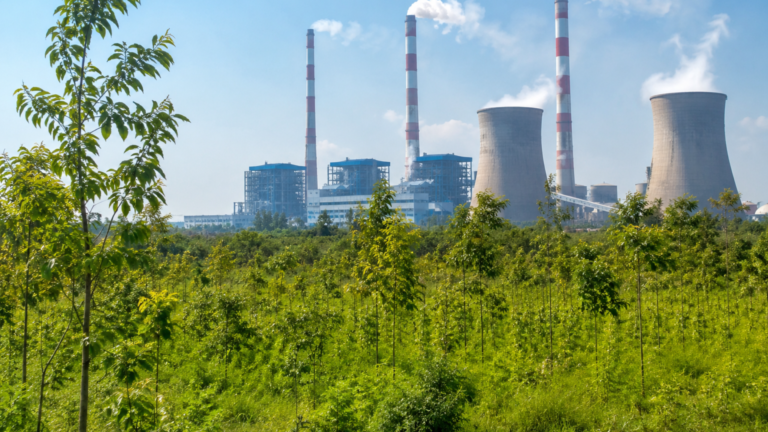
The featured photograph is for representation only.