
Supreme Court eases power line curbs to balance GIB conservation and renewables
Author: PPD Team Date: December 22, 2025

The Supreme Court of India has delivered its final judgment on the long running case concerning protection of the Great Indian Bustard and the expansion of renewable energy infrastructure in Rajasthan and Gujarat. In its order dated 19 December 2025, the Court largely accepted the recommendations of a court appointed expert committee and modified its earlier blanket restrictions on overhead power lines.
The case arose from Writ Petition Civil No. 838 of 2019 filed by conservationists including M K Ranjitsinh. The petition highlighted the high mortality of the Great Indian Bustard (GIB), locally known as Godawan, due to collisions with overhead transmission lines. The species has an estimated mature population of 50 to 249 birds, largely confined to the Thar desert regions of Rajasthan and Gujarat, which also host large scale solar and wind projects.
In April 2021, the Supreme Court had imposed a blanket prohibition on new overhead transmission lines across about 99,000 sq km of priority and potential GIB habitat in the two states. It also directed undergrounding of existing lines where feasible and installation of bird flight diverters on overhead lines. The Union Government later sought modification of these directions, citing technical constraints and their impact on renewable energy targets.
In March 2024, the Court recalled the earlier directions and constituted a seven member expert committee, with additional power sector experts, to recommend a balanced and science based approach. The committee submitted separate reports for Rajasthan and Gujarat after field assessments and stakeholder consultations.
For Rajasthan, the committee recommended revising the GIB priority area to 14,013 sq km. It proposed a dedicated power corridor of up to 5 km width south of the Desert National Park, through which all new 66 kV and above transmission lines within the priority area would be routed. It also recommended prohibiting new wind turbines and solar projects above 2 MW capacity within the revised priority area.
The committee called for immediate undergrounding of 80 km of identified 33 kV lines, re routing of select 66 kV and above lines, and mitigation of 11 kV and lower voltage lines using insulated or bunched cables. It did not recommend large scale use of bird flight diverters, citing limited evidence of effectiveness for bustards and high maintenance requirements.
For Gujarat, the committee expanded the priority area from 500 sq km to 740 sq km and identified two dedicated power corridors to consolidate transmission lines. It recommended undergrounding or re routing of 33 kV and critical 66 kV lines, with mitigation to be completed in phases over two years.
In its judgment, authored by Justices P S Narasimha and Atul S Chandurkar, the Court accepted the committee’s recommendations and rejected calls for stricter measures such as a complete ban on overhead lines, mandatory bird flight diverters on all lines, and dismantling of existing wind turbines. The Court held that the expert committee had struck an appropriate balance between species conservation and renewable energy development.
The Court issued binding directions giving effect to the committee’s core recommendations. These include formalising the revised priority areas, enforcing restrictions on new renewable projects within these areas, approving dedicated power corridors, and mandating undergrounding and re routing of identified transmission lines within two years, by December 2027. It also directed route optimisation for future lines and ordered studies on bird flight diverter effectiveness and climate change impacts on the GIB.
The judgment marks a shift from absolute prohibitions to a managed coexistence approach. It places responsibility on central and state authorities, power utilities, and developers to implement time bound mitigation measures while safeguarding one of India’s most endangered species.
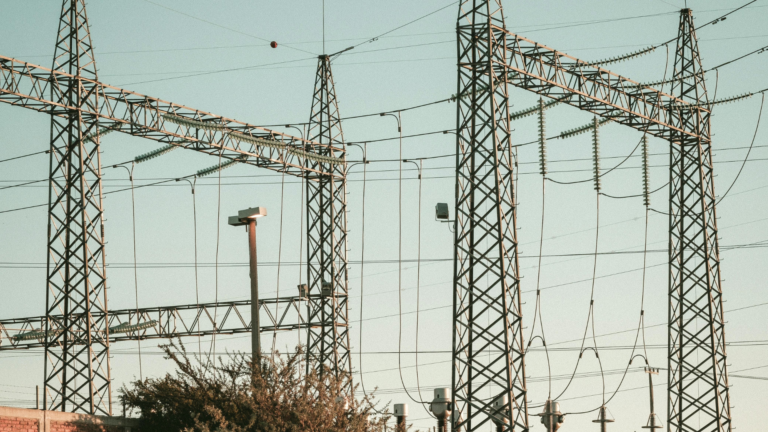
The featured photograph is for representation only.