Solar carports: Combining parking with clean energy
Author: PPD Team Date: October 13, 2025
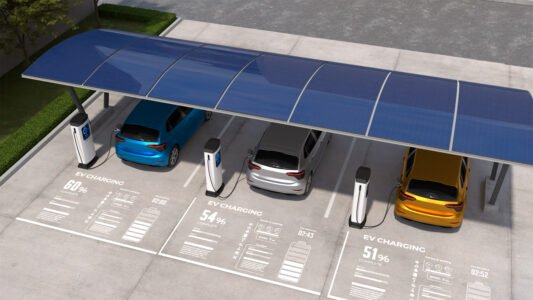
A solar carport is a parking structure with a roof made of solar panels, providing shade and protection for vehicles while generating electricity. The terms solar carport and solar parking canopy are used interchangeably. Solar carports are installed in residential and commercial settings across India, ranging from single-car driveways to large canopies covering entire parking lots. Modern systems can include integrated electric vehicle (EV) chargers, battery storage, and remote monitoring to track performance. Unlike conventional carports, solar carports convert unused space into energy-producing hubs, reducing electricity bills and carbon footprints. Their scalable design allows tailored solutions for various energy needs and budgets.
Benefits of solar carports
Solar carports reduce energy bills by generating electricity on-site and can feed excess power back to the grid. They optimise land use by turning otherwise unused parking areas into productive energy assets. The structure protects from UV rays, rain, snow, and hail, reducing vehicle wear. Integration with EV charging stations promotes clean transportation.
Unlike rooftops, carports can be designed with optimal tilt and orientation for energy capture. They contribute to sustainability by lowering greenhouse gas emissions and fossil fuel dependence. Property value can increase due to functional infrastructure and energy savings. Solar carports also reduce parking lot maintenance, provide energy security with battery storage, and are easily scalable for growing energy needs. Modern designs improve aesthetics, and installations may qualify for government incentives, further improving return on investment.
Types of solar carports in India
Residential solar carports are designed for homes, accommodating one or multiple vehicles. They can be customised to match the architecture of the property, and DIY kits make solar adoption accessible.
Commercial solar carports are common in business, school, and mall parking lots. They cover larger areas and support higher energy demands, often including EV charging and battery storage.
Residential solar carports are small-scale installations for individual homes, typically serving one to three vehicles with capacities of 5–10 kW. They are simple to install, require limited permits, and benefit from home solar rebates. Commercial carports cover large parking areas, from 50 kW to several hundred kW or even MW. They require engineered structures, complex installations, and multiple approvals. Commercial installations offer faster payback through larger incentives, accelerated depreciation, and tax benefits. They also provide higher capacity to meet energy needs, support EV infrastructure, and enhance sustainability branding.
Cost of solar carports in India
The cost depends on system size, design, and installation complexity. Residential systems range from 1–10 kW, costing Rs 1.1–2 lakh per kW before subsidies, with MNRE subsidies reducing this to Rs 70,000–1.2 lakh per kW. Commercial systems start at 50 kW and can exceed 1 MW, costing Rs 40,000–60,000 per kW. Mounting structure, installation, wiring, and inverters are included in the overall investment. Annual maintenance costs vary from Rs 2,000 to Rs 5,000 for residential systems to Rs 10,000 to Rs 20,000 for commercial systems. Payback periods range from 5 to 7 years for residential installations and 3 to 5 years for commercial installations. Government incentives, such as the PM Surya Ghar: Muft Bijli Yojana, and accelerated depreciation for commercial systems further improve returns.
Government initiatives and adoption
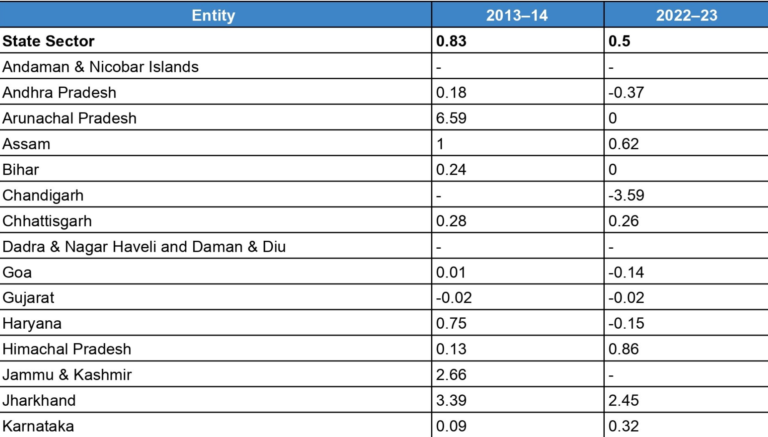
Currently, the Ministry of New and Renewable Energy (MNRE) does not have a specific scheme for solar carports. However, under the PM Surya Ghar: Muft Bijli Yojana (PMSG: MBY) launched in February 2024, financial support is available to group housing societies and residential associations for rooftop solar installations, including solar carports with EV charging. Notable solar carports have been installed under other initiatives, such as the solarisation of Modhera Sun Temple in 2020 and projects by CESL. Chandigarh has 3,745 kW installed across 22 sites. Gujarat features carports at Sachivalay, Gandhinagar, and the Statue of Unity with battery energy storage systems (BESS). Jharkhand installed a 2 MW carport at the High Court, while Ladakh has a CESL installation at Leh with 110 kWp and 860 kWh BESS. These examples illustrate the growing adoption of solar carports in India, combining energy production, vehicle protection, and sustainability.
Conclusion
Solar carports represent more than just covered parking—they are a convergence of sustainability, cost efficiency, and smart infrastructure. In India’s rapidly growing renewable energy landscape, they offer a practical way to maximise underutilised spaces while supporting EV adoption and reducing carbon footprints. With scalable designs, government incentives, and proven commercial and institutional deployments, solar carports provide a versatile solution for homeowners, businesses, and public institutions alike. As energy demands rise and sustainability becomes a strategic priority, investing in solar carports positions properties to save on energy costs, enhance resilience, and demonstrate leadership in clean energy adoption.
The featured photograph is for representation only.