Mufin Green Finance raises Rs 900 million through listed NCD issuance
Author: PPD Team Date: December 9, 2025

Author: PPD Team Date: December 9, 2025
Mufin Green Finance Limited has raised Rs 900 million through a private placement of secured, rated and listed non convertible debentures. The proceeds will support the company’s rooftop and commercial solar installations, electric mobility initiatives and health insurance premium financing.
The company issued 9,000 non convertible debentures priced at Rs 0.1 million each. The instruments carry an 11.75 per cent coupon paid semi annually and have a tenure of 4 years, 11 months and 23 days. They mature on 26 November 2030. About 99.99 per cent of the principal will be redeemed in November 2028 and the balance will be paid at maturity. The debentures will be listed on the Bombay Stock Exchange.
Mufin Green Finance is a climate finance provider that focuses on extending access to finance to underserved and unbanked segments. Earlier this month, the company announced plans to finance Rs 5 billion of solar projects by 2026. It recently completed its first solar financing transaction worth Rs 32.5 million for a rooftop solar project at a manufacturing facility in Baroda, Gujarat, owned by a company with revenue of USD 3 billion.
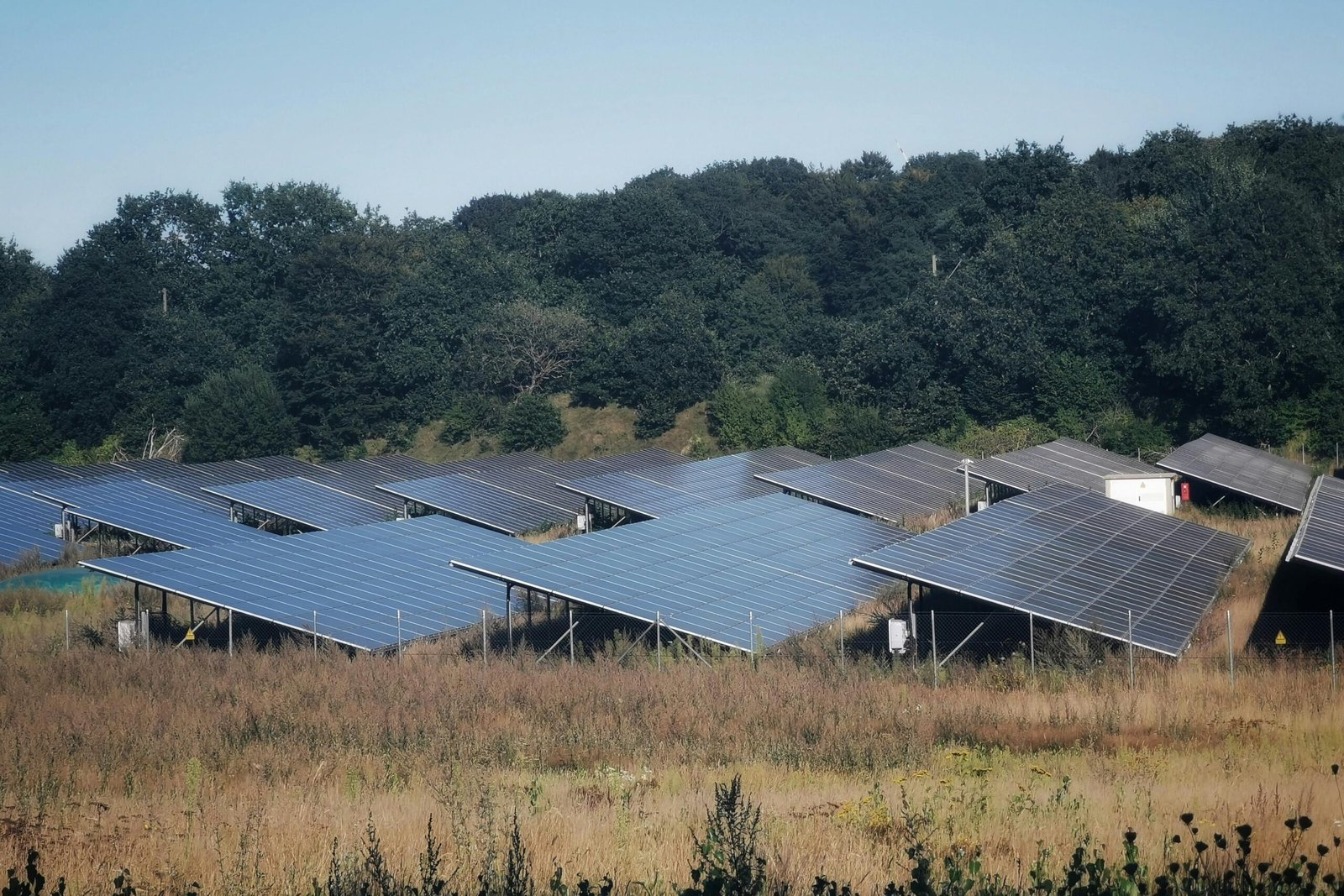
The featured photograph is for representation only.

Author: PPD Team Date: February 5, 2026 Waaree Energies Limited has secured an overseas solar module supply order through its United States subsidiary, adding to its international order pipeline. In a regulatory filing dated February 4, 2026, the company said its wholly owned subsidiary, Waaree Solar Americas Inc., has received an order to supply 150 MW of solar modules. The customer has been described as a reputed solar power developer and independent power producer. The…
Author: PPD Team Date: September 19, 2024 Ministry of Renewable Energy has received investment commitments totalling $386 billion from banks and financial institutions at the RE-Invest conference in Gandhinagar, Gujarat. These investments aim to help India double its clean electricity capacity by 2030, targeting 500 GW of non-fossil capacity. ReNew, a major renewable energy company pledged to expand its renewable capacity from 10 GW to 50 GW by 2030, with 10 GW dedicated to storage….
Author: PPD Team Date: August 19, 2025 A study by Europe Economics, commissioned by the UK Department for Energy Security and Net Zero, has developed a methodology to estimate the electricity consumption of digital services against physical equivalents. The research assesses energy use across the full delivery chain. For digital services, this includes data centres, transmission networks, and end-user devices. For physical alternatives, it covers manufacturing, transport, retail, office delivery, and end-user devices. Unlike earlier…
Author: PPD Team Date: December 20, 2024 The central government has selected a site near Arasinakeri, Koppal, for Karnataka’s second nuclear power plant. However, the proposal faces opposition due to land shortages and environmental concerns, particularly regarding nearby protected forest areas. The government requires 1200 acres for the plant, but only 615-635 acres are available. The district administration is surveying nearby land, at least 3 km from populated areas, to meet the requirement. Environmentalists and…
Author: PPD Team Date: October 16, 2024 The Ministry of Power (MoP) has launched the National Electricity Plan for transmission, targeting the transmission of 500 GW of renewable energy by 2030 and over 600 GW by 2032. The plan also addresses the need for 47 GW of battery energy storage systems and 31 GW of pumped storage plants. From 2022-23 to 2031-32, the plan aims to add over 191,000 circuit km of transmission lines and…
Author: PPD Team Date: November 25, 2024 The Australian Capital Territory (ACT) government and Eku Energy have commenced construction of the Williamsdale Battery Energy Storage System (BESS), a 250 MW/500 MWh project under the ACT Government’s Big Canberra Battery initiative. Scheduled to begin operations in 2026, the BESS will store enough renewable energy to power one-third of Canberra for two hours during peak demand, playing a pivotal role in achieving the ACT’s net-zero emissions target…