
CAG flags planning and execution gaps in DDUGJY and SAUBHAGYA schemes
Author: PPD Team Date: December 26, 2025

The Comptroller and Auditor General of India (CAG) has reported major deficiencies in the planning, execution, financial management, and monitoring of the Deen Dayal Upadhyaya Gram Jyoti Yojana (DDUGJY) and the Pradhan Mantri Sahaj Bijli Har Ghar Yojana (SAUBHAGYA).
The Government of India launched the schemes to improve rural electricity access and reliability. The Deen Dayal Upadhyaya Gram Jyoti Yojana (DDUGJY) began in December 2014 to separate agricultural and non-agricultural feeders, strengthen sub-transmission and distribution systems, and complete pending works from the Rajiv Gandhi Grameen Vidyutikaran Yojana (RGGVY). The Pradhan Mantri Sahaj Bijli Har Ghar Yojana (SAUBHAGYA), launched in October 2017, focused on last-mile electrification of unelectrified households, including solar photovoltaic systems for remote areas, and coverage of economically poor urban households. Both schemes stressed metering and reduction of Aggregate Technical and Commercial (AT&C) losses in line with the Electricity Act, 2003.
Financial approvals were substantial. The Cabinet Committee on Economic Affairs approved DDUGJY and RGGVY works with an outlay of Rs 75,893 crore, including Rs 63,027 crore as budgetary support. SAUBHAGYA was approved at Rs 16,320 crore, including Rs 12,320 crore from the Centre, with an additional Rs 14,183 crore sanctioned for infrastructure. DDUGJY projects were to be completed within 24–30 months from award, while SAUBHAGYA was targeted for completion by 31 March 2019. Officially, India declared the electrification of 18,452 unelectrified villages within 987 days by 28 April 2018, which was acknowledged internationally.
DDUGJY implementation performance
DDUGJY closed at Rs 64,495 crore, with Rs 45,025 crore budgetary support, against a sanctioned cost of Rs 67,280 crore. Initial Central Electricity Authority assessments estimated wide-ranging system strengthening and feeder separation works. Actual implementation showed uneven outcomes. Feeder separation lagged sharply, while several network components exceeded sanctioned quantities but fell short of original planning benchmarks.
DDUGJY component-wise targets, sanctions, and achievements:

REC appraisals significantly reduced proposed costs for system strengthening and feeder separation. State-level outcomes varied widely, with some states achieving very low feeder separation and others exceeding sanctioned capacities. AT&C loss reduction targets were missed in 12 states and 1 Union Territory, leading to the forfeiture of Rs 3,631.62 crore in grants.
Planning and execution delays were widespread. Detailed Project Reports for 605 projects were often not supported by field surveys and many were submitted late. Contract awards were delayed in most cases, and project completion timelines slipped in a large majority of works. Feeder separation did not fully eliminate mixed loads in states such as Jharkhand and Uttar Pradesh, and surveys showed that many villages continued to receive below 12 hours of supply. Several villages also remained partially electrified.
Financial and quality issues under DDUGJY
The audit noted irregular fund releases, diversion of funds across schemes, absence of dedicated bank accounts, and interest losses. Quality assurance processes were inconsistent. Several states and Union Territories lacked approved Quality Assurance Plans, procurement from unauthorised vendors was recorded, many defects remained unresolved, inspections were delayed, and verification processes were weak. Monitoring committees did not meet regularly, and funds remained idle in unused meters.
SAUBHAGYA implementation, finances, and monitoring
SAUBHAGYA targeted 300 lakh households, but the audit notes that dashboard claims of 100 per cent achievement were based on combined contributions from multiple schemes and revised estimates. Delays in Detailed Project Reports were widespread. The audit identified duplication of beneficiaries, ineligible expenditure, undue contractor benefits, and revisions in estimates. The scheme closed at Rs 9,246 crore, with Rs 5,782 crore as budgetary support.
Financial scrutiny highlighted idle extra budgetary borrowings, higher Project Management Agency charges in some states, and diversions to other schemes. Monitoring weaknesses includedthe absence of Quality Assurance Plans for a large number of projects, skipped pre-dispatch inspections, incomplete household verification, delayed appointment of REC Quality Monitors, irregular functioning of monitoring committees, and execution of additional infrastructure without revised Detailed Project Reports.
Recommendations and conclusion
The CAG issued 14 recommendations. These relate to realistic feasibility assessments, field-based Detailed Project Reports, standardised execution processes, strict financial compliance, stronger quality assurance mechanisms, regular review by statutory committees, reconciliation of programme data, reassessment of extra-budgetary borrowing, and clearer definitions of electrification. The Ministry of Power stated in November 2024 that these will be incorporated into future programmes such as the Revamped Distribution Sector Scheme.
The audit notes that while the schemes contributed to expanding household electrification, persistent gaps in feeder separation, loss reduction, quality assurance, and monitoring affected intended outcomes and the reliability of rural supply.
Access the full report here.
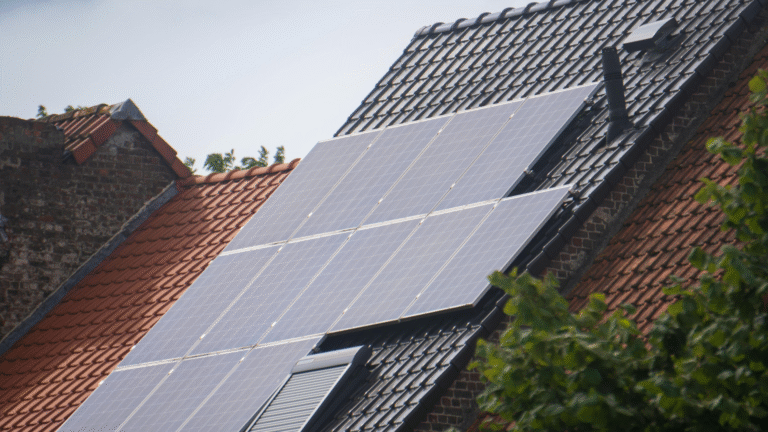
The featured photograph is for representation only.