
Land delays, Suzlon’s troubles, COVID: none of it excuses skipping a signed PPA, says CERC

The Central Electricity Regulatory Commission (CERC) has dismissed a petition filed by Betam Wind Energy Private Limited (BWEPL), a subsidiary of the Engie Group, seeking discharge from its obligation to execute a Power Purchase Agreement (PPA) with the Solar Energy Corporation of India Limited (SECI) for a 200 MW wind power project.
The Commission held that the developer could not avoid its contractual obligations by citing difficulties related to land acquisition, Ministry of Defence clearances, the financial condition of its original equipment manufacturer (OEM), COVID-19 disruptions or regulatory approval delays.
Project background
BWEPL was selected in 2019 through a competitive bidding process to develop a 200 MW wind power project in Gujarat at a tariff of Rs 2.79 per unit. The company subsequently submitted a Performance Bank Guarantee (PBG) of Rs 40 crore to SECI.
However, despite receiving multiple extensions from SECI, the developer did not execute the PPA. BWEPL argued that several supervening events had made implementation of the project impossible.
The company contended that changes in Gujarat’s land policy in November 2019 restricted projects under Tranche-V and subsequent bidding rounds to renewable energy parks, creating difficulties in securing land. It also cited delays in obtaining No Objection Certificates from the Ministry of Defence, the financial distress of Suzlon Energy, COVID-19-related disruptions and delays in tariff adoption and Power Sale Agreement (PSA) approval.
SECI and UPPCL arguments
SECI argued that responsibility for land acquisition and statutory clearances rested entirely with the developer under the bidding documents. It also maintained that BWEPL was free to establish the project anywhere in India and was not dependent on Gujarat government land.
According to SECI, Ministry of Defence clearance was not a precondition for signing the PPA and the developer had sufficient time to secure approvals after execution of the agreement. The agency noted that BWEPL had been granted time until November 23, 2021, to sign the PPA.
Uttar Pradesh Power Corporation Limited (UPPCL), the beneficiary of the power, argued that the developer’s failure to execute the PPA resulted in the loss of 200 MW of wind power at a tariff of Rs 2.79 per unit, adversely affecting consumers.
Commission findings
CERC rejected all grounds advanced by BWEPL.
On land acquisition, the Commission observed that the bidding documents clearly assigned responsibility for securing land to the developer. The change in Gujarat’s land policy may have made project execution more difficult, but did not make it impossible. The Commission noted that BWEPL could have used private land or developed the project in another state.
Regarding Suzlon’s financial difficulties, CERC held that issues involving contractors or suppliers were matters between the developer and its OEM. The standard PPA specifically excludes contractor-related delays from force majeure provisions.
The Commission also ruled that Ministry of Defence clearances were not a prerequisite for signing the PPA and that SECI had already provided extensions for obtaining such approvals.
On COVID-19, CERC noted that the Ministry of New and Renewable Energy (MNRE) had issued relief measures only for extending Scheduled Commissioning Dates and not for exempting developers from executing PPAs.
The Commission further observed that the Uttar Pradesh Electricity Regulatory Commission (UPERC) had approved the PSA in March 2021, leaving BWEPL with more than eight months to sign the PPA before the extended deadline expired.
Doctrine of frustration
While examining the petition, CERC relied on Supreme Court judgments, including Energy Watchdog v. CERC and Alopi Parshad v. Union of India, to conclude that contractual obligations cannot be avoided merely because performance has become more difficult or commercially burdensome.
The Commission held that a contract is not frustrated simply because circumstances have changed and that courts cannot absolve parties of their contractual obligations merely because performance has become onerous due to unforeseen events.
Relief granted
CERC held that BWEPL’s refusal to execute the PPA amounted to a breach of the Request for Selection (RfS) and Letter of Award.
The Commission ruled that SECI is entitled to encash the PBG to the extent of the Earnest Money Deposit (EMD) of Rs 12 crore, along with applicable GST. It also permitted SECI to recover success charges, including advance GST of Rs 32.40 lakh, and delay charges for the 29-day delay in submission of the PBG.
However, the Commission rejected UPPCL’s claim for transfer of the entire PBG amount, observing that the relevant provisions become applicable only after the execution of a PPA.
Implications
The order reinforces the binding nature of obligations arising from competitive renewable energy auctions and clarifies that project development risks such as land acquisition challenges, contractor-related issues and regulatory approvals remain the responsibility of developers unless expressly covered under contractual relief provisions.
The ruling also underscores the Commission’s position that successful bidders cannot withdraw from awarded projects on grounds that increase project complexity or cost after the bid has been secured.
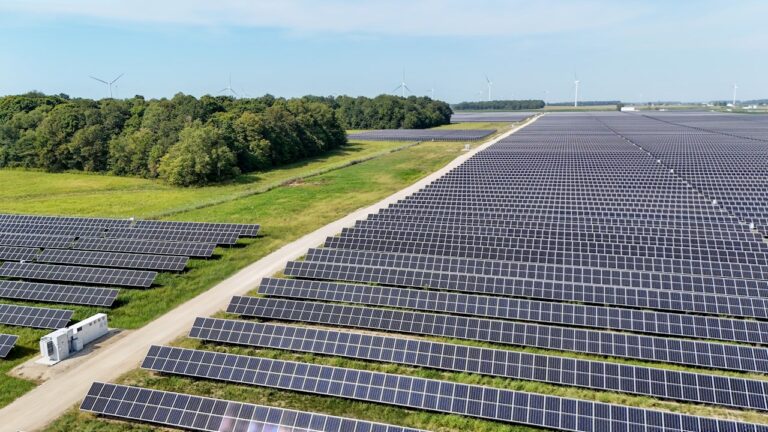
The featured photograph is for representation only.