
OERC clears Rs 3,690 crore OPTCL transmission investment plan

The Odisha Electricity Regulatory Commission (OERC) has approved investments of around Rs 3,690 crore for 35 transmission infrastructure projects proposed by Odisha Power Transmission Corporation Limited (OPTCL), while simultaneously tightening regulatory oversight on project execution, cost estimation, and planning discipline. The approvals were granted through two orders dated April 27, 2026 in Case Nos. 33/2025 and 86/2025.
The approved projects cover construction of new grid substations, high-temperature low-sag (HTLS) conductor conversion works, disaster-resilient underground cable systems, and digital modernisation initiatives for the state transmission network.
Among the largest projects approved are three 400/220/33 kV substations. The Neulapoi substation in Dhenkanal district, approved at Rs 539.81 crore, is intended to cater to rising industrial demand. The Gopalpur substation project, approved at Rs 435.64 crore, is aimed at supporting proposed green hydrogen and green ammonia industries. The Ramakrishnapur substation in Bhadrak district, approved at Rs 344.94 crore, is intended to serve emerging industrial loads.
The Commission recorded internal rates of return of 56.89% for the Gopalpur project and 31.88% for the Ramakrishnapur project.
Other major approvals include a 220 kV underground cable project between Mendhasal and Chandaka costing Rs 276.33 crore and a 132/33 kV Gas Insulated Substation (GIS) at SCB Medical College and Hospital, Cuttack, estimated at Rs 180.35 crore. The SCB Medical College project is to be fully funded through government grant support to ensure reliable electricity supply to the healthcare facility.
OERC also approved seven HTLS conductor conversion projects across 400 kV, 220 kV, and 132 kV transmission lines to increase power transfer capability within existing transmission corridors without requiring construction of new lines.
In addition, disaster-resilient underground cable projects under the Disaster Resilient Power System (DRPS) Phase-II scheme were approved for cyclone-prone coastal areas and the capital region. Technology modernisation projects cleared by the Commission include the State Transmission Asset Management System Phase-I project costing Rs 248.89 crore and implementation of a SAP-based Enterprise Resource Planning (ERP) system at Rs 30.3 crore.
While granting approval, the Commission expressed concern regarding what it described as a recurring practice of utilities commencing projects without obtaining prior regulatory approval under licence conditions. OERC observed that such a practice was “not healthy or fair” and stated that expenditure incurred on projects initiated without prior approval would not be considered for inclusion in Aggregate Revenue Requirement (ARR) calculations.
The Commission also issued multiple planning-related directives to OPTCL. For the Neulapoi and Ramakrishnapur substations, OERC directed the utility to phase bay commissioning in accordance with actual load growth rather than implementing full-scale deployment upfront, while reserving space for future expansion.
To avoid proliferation of closely located substations, the Commission prescribed minimum planning capacities for future projects. The norms specify minimum planned capacities of 150/240 MVA for 132/33 kV substations, 600 MVA for 220/132 kV substations, and 2,000 MVA for 400/220/132 kV substations.
OERC additionally directed OPTCL to execute binding agreements with distribution licensees to ensure synchronised completion of transmission substations and downstream distribution infrastructure. The agreements are required to include penalty provisions for delays.
On project costing, the Commission directed OPTCL to benchmark future cost estimates against Government of Odisha rate contracts or recently awarded tenders, observing that some submitted project estimates appeared to be on the higher side.
The Commission also advised OPTCL to explore the possibility of public listing on a recognised stock exchange to improve transparency and corporate governance standards. For economically unviable projects in remote regions, OERC suggested that OPTCL engage with the state government to secure 100% grant funding support in order to minimise tariff impact on consumers.
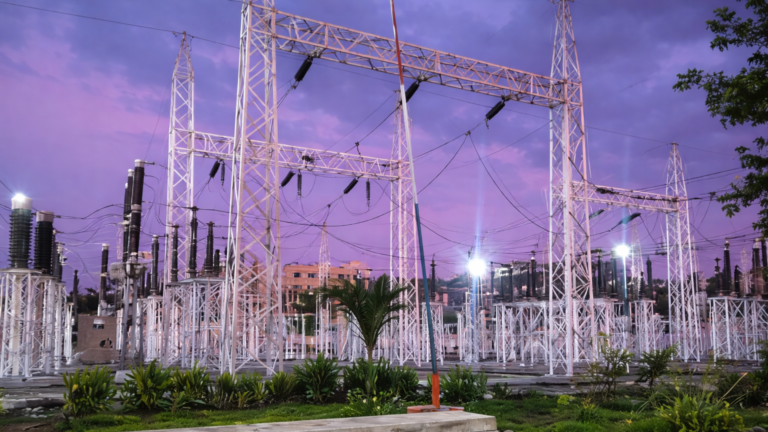
The featured photograph is for representation only.