
CERC notifies tariff framework for co-located battery storage systems
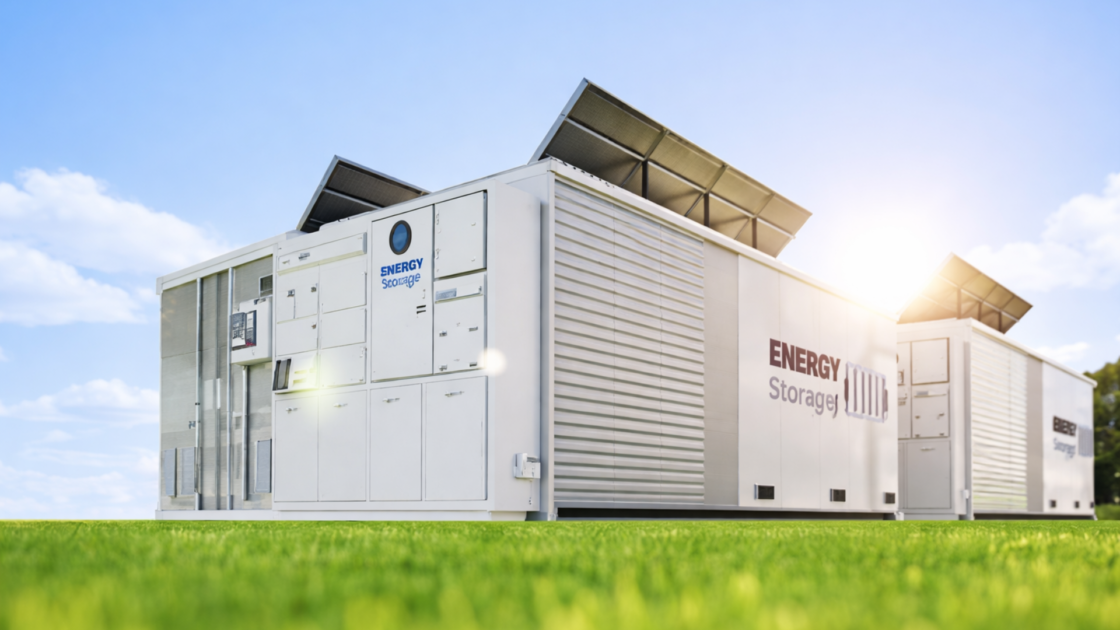
The Central Electricity Regulatory Commission (CERC) has notified the Terms and Conditions of Tariff (Second Amendment) Regulations, 2026, establishing a tariff framework for battery energy storage systems (BESS) co-located with coal, lignite, and gas-based thermal generating stations, as well as interstate transmission infrastructure.
Supplementary tariff for integrated storage
The amendment introduces a supplementary tariff structure to recover costs of storage assets integrated with existing generating stations or transmission systems. It provides for separate fixed storage charges and energy charges. The framework applies to “integrated energy storage systems,” defined as storage co-located with a plant or substation and connected through a common busbar.
Lithium-ion battery systems are assigned a useful life of 15 years, with straight-line depreciation at 6.33% annually. Annual capacity degradation is set at 2%, subject to review every three years.
Operational norms and financial parameters
CERC has specified normative availability of 90% for systems at generating stations and a round-trip efficiency of 85%, with the higher of normative or actual values used for billing. Auxiliary energy consumption is set at 5% of input energy. Operation and maintenance (O&M) expenses are fixed at 2% of admitted capital cost at commercial operation date (COD), escalated at 5.25% for the first two years. Initial spares are capped at 4% of capital cost and tracked separately.
The base return on equity is set at 14%. Working capital norms include receivables equivalent to 45 days of supplementary tariff, one month of O&M expenses, and maintenance spares at 10% of O&M.
Energy charge mechanism and incentives
The supplementary energy charge rate varies with the source of charging energy. Where storage is charged from surplus generation at the same plant, only energy charges apply. If sourced from another station, both capacity and energy charges of that station are included. Open-market procurement is based on discovered tariffs.
In all cases, the applicable rate is adjusted by dividing it by the product of round-trip efficiency and auxiliary consumption factor to derive the ex-bus cost. An incentive of 10 paise per kWh is payable for discharge exceeding the level implied by normative round-trip efficiency.
Approval process and timelines
Generating companies are required to share storage investment proposals with beneficiaries, allow 30 days for responses, and obtain in-principle approval from CERC. After commissioning, supplementary tariff petitions are to be filed within 90 days of COD. Transmission licensees follow a similar process and also require concurrence from Central Transmission Utility (CTU), National Load Despatch Centre (NLDC), and the relevant Regional Load Despatch Centre (RLDC).
Projects under the viability gap funding scheme have six months from the notification date to seek approval.
Revenue sharing and regulatory sandbox
Additional revenue earned from storage services, including ancillary services or open-market sales, is to be shared equally between the utility and beneficiaries after recovery of fixed costs. For transmission licensees, such receipts are adjusted against the annual transmission charge pool.
The regulations also introduce a regulatory sandbox framework for research and innovation. Costs under this provision are capped at 1% of annual fixed cost or Rs 100 crore, whichever is lower. CERC will issue separate guidelines.
Retrospective amendments and filing formats
Amendments to Regulations 51 and 52, relating to overburden adjustment and gross calorific value (GCV) formulas for integrated mines, take retrospective effect from April 1, 2024, to correct ambiguities in mining charge computations under mine developer and operator (MDO) contracts.
The notification was signed by Secretary Harpreet Singh Pruthi. Updated tariff filing formats for thermal and transmission petitions, including ESS-specific data sheets covering battery chemistry, C-rate, state of charge, cycle life, and round-trip efficiency, have been appended to the principal regulations.
Access the notification here.
The featured photograph is for representation only.