
UK shifts inflation indexation for legacy renewable subsidies
The UK Department for Energy Security and Net Zero (DESNZ) has confirmed it will move ahead with changes to how inflation is applied to two legacy renewable energy subsidy schemes. The decision is expected to reduce payments to generators while lowering costs for electricity billpayers.
From April, subsidy payments under the Renewables Obligation (RO) and the Feed-in Tariff (FiT) schemes will be indexed to the Consumer Price Index (CPI) instead of the Retail Price Index (RPI). As CPI has historically risen more slowly than RPI, the change will result in smaller annual payment increases for generators covered by these schemes.
DESNZ said the reform is necessary and proportionate, pointing to projected scheme costs of more than £8 billion this year, with the potential to rise to £10 billion. The department estimates the shift could save consumers £270 million a year by 2030. According to DESNZ, continued use of RPI had led to overcompensation of generators, particularly during periods of high inflation.
Renewable energy industry groups have criticised the move, arguing that it represents a retrospective change to existing arrangements. They warned it could weaken investor confidence and raise the cost of capital for future clean energy projects, at a time when the UK is seeking to expand renewable capacity to meet its 2030 clean power targets.
The RO, introduced in 2002, and the FiT scheme, launched in 2005, are both closed to new applicants. However, existing contracts will continue to receive payments until between 2027 and 2037. The change comes alongside a Treasury commitment to fund 75% of RO costs over the next three years as part of efforts to ease pressure on household energy bills.
DESNZ said the revised indexation approach strikes a balance between protecting consumers and maintaining investor confidence. Industry bodies, however, continue to warn that the decision could slow the pace of renewable deployment needed to support energy security and decarbonisation.
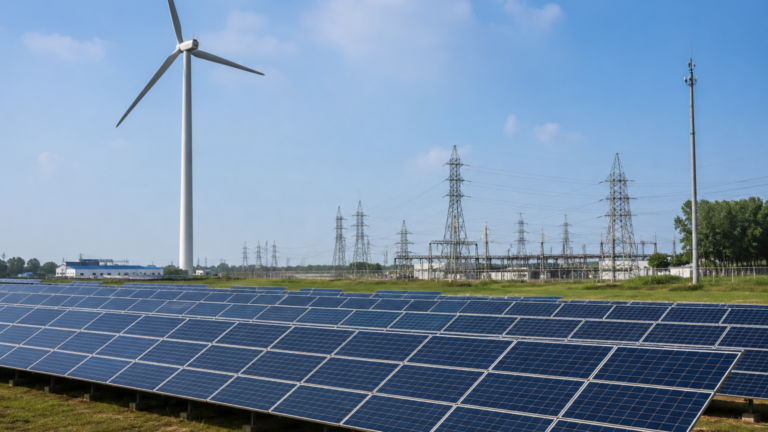
The featured photograph is for representation only.