Udangudi thermal project at a crossroads: compliance status and appraisal

The Udangudi Supercritical Thermal Power Project is located in Udangudi Village, Tiruchendur Taluk, Thoothukudi District, Tamil Nadu. Originally planned as a 2×800 MW imported coal-based plant, it is now being developed as a 2×660 MW supercritical coal-based power plant by Tamil Nadu Power Generation Corporation Limited (TNPGCL). The project aims to strengthen Tamil Nadu’s power capacity while going through detailed environmental scrutiny.
The project site is situated on the southeastern coast of Tamil Nadu, near the Gulf of Mannar. The total land area allocated for the project is 380 hectares, which is entirely government-owned and designated for industrial use. The site is approximately 2 to 10 meters above mean sea level. The land use within the project boundary is meticulously planned: 26.305 hectares for the main plant, transformer yard, and switchyard; 26.305 hectares for the coal yard; 17.402 hectares for the cooling water system; 48.562 hectares for the ash dyke; and a significant 167.058 hectares (about 44% of the total area) is earmarked for greenbelt development. The remaining area accommodates fuel oil systems, water treatment, administrative buildings, workshops, stores, and corridors for piping and roads.
Project History and Regulatory Journey
The project has a long and evolving regulatory history. The Ministry of Environment, Forest and Climate Change (MoEF&CC) first granted Environmental Clearance (EC) on 14 October 2013 for a 2×800 MW supercritical imported coal-based plant. This EC was amended on 26 July 2017 to reduce the unit capacity to 2×660 MW. A validity extension was granted on 25 September 2020, extending the clearance until 13 October 2023. A further extension, factoring in the COVID-19 pandemic as per a 2021 notification, effectively lasted until 13 October 2024.
However, the project could not be commissioned within this validity period, with physical completion reported at 82.85%. Consequently, the proponent sought a fresh Environmental Clearance under the provisions of the MoEF&CC notification S.O. 1247(E) dated 18 March 2021. This notification allows for a fresh EC application for projects that have not been completed within the validity period, with the possibility of exemption from a fresh public hearing if the project is more than 50% complete physically.
A significant change was introduced at this stage: the fuel mix. The original EC was for 100% imported coal. The fresh proposal, for which new Terms of Reference (ToR) were granted on 29 July 2024, seeks to use a blend of 50% imported coal and 50% domestic coal. The ToR was subsequently transferred from the Tamil Nadu Generation and Distribution Corporation (TANGEDCO) to TNPGCL on 26 July 2025.
It is important to note that the interlinked infrastructure components, the coal jetty, pipe conveyor, and cooling water intake and outfall systems, are treated as a separate project. They have obtained integrated EC and Coastal Regulation Zone (CRZ) clearance from the MoEF&CC on 3 August 2022.
Project Technical Specifications
The Udangudi project is designed as a supercritical thermal power plant with a total capacity of 1320 MW (2 units of 660 MW each). Supercritical technology operates at higher temperatures and pressures, resulting in improved efficiency and lower coal consumption per unit of electricity generated compared to subcritical plants.
The annual coal requirement for the plant is estimated at 5.893 million metric tonnes. This coal will be a 50:50 blend of imported and domestic coal. The imported coal is characterised by lower ash content (8.09%) but higher sulphur content (0.52%), while the domestic coal has a higher ash content (43.5%) and lower sulphur content (0.31%). The gross calorific value is 4350 Kcal/kg. Coal will be transported from the dedicated jetty to the plant via a 1.2 km long pipe conveyor system.
Water is a critical resource for the plant. The total requirement is 281,808 cubic meters per day. A significant portion of this, 194,640 m³/day, will be sourced from the sea for cooling purposes. The balance fresh water requirement of 87,168 m³/day will be met by a 16 MLD desalination plant. The water will be conveyed to the plant site through a pipeline. The plant’s auxiliary power requirement is estimated at 92 MW, which will be sourced from the plant itself.
Environmental Safeguards and Management Plans
The project design incorporates several environmental protection measures with a dedicated capital cost of Rs. 993.17 crores and an annual recurring cost of Rs. 61.61 crores.
Air Pollution Control: The plant will install High-Efficiency Electrostatic Precipitators (ESPs) to control particulate matter emissions, ensuring compliance with the stack emission standard of 30 mg/Nm³. Low NOx burners will be used to control nitrogen oxide emissions. A 275-meter-high bi-flue stack will be constructed to ensure adequate dispersion of flue gases, complying with the MoEF&CC stack height notification. Dust suppression systems, including dry fog systems, will be operational in coal handling and transfer areas. As the plant falls under Category C as per the 2025 FGD notification and uses low-sulphur coal, the installation of a Flue Gas Desulphurization (FGD) unit is not proposed at this stage.
Water and Wastewater Management: The project aims for zero liquid discharge. Effluent generated from the plant (720 KLD) will be treated in an Effluent Treatment Plant (ETP) and reused for horticulture. Domestic sewage (24.5 KLD) will be treated in a Sequential Batch Reactor (SBR) based Sewage Treatment Plant (STP) and similarly reused.
Ash Management: The plant is expected to generate 1.31 million tonnes of ash (fly ash and bottom ash) per annum. A comprehensive ash utilization plan targets 100% usage, primarily in cement manufacturing and brick making. An ash dyke spread over 48.562 hectares with a High-Density Polyethylene (HDPE) liner will be constructed for emergency slurry disposal. The dyke has an expected life of over 6 years. An Ash Water Recycling System (AWRS) will recirculate 15,314.4 m³ of water daily, minimizing fresh water consumption for ash handling.
Greenbelt Development: A major greenbelt covering 167.058 hectares (44% of the project area) is planned. This will involve planting approximately 334,116 saplings of local and native species over five years, with a density of 2500 trees per hectare. A three-tier plantation scheme is proposed along the project boundary.
Solid and Hazardous Waste: Domestic solid waste will be segregated and managed through the local town panchayat, with biodegradable waste processed in an Organic Waste Converter. Hazardous wastes like waste oil, resin, and glass wool will be sent to a licensed Treatment, Storage, and Disposal Facility (TSDF).
Baseline Environmental Conditions
Baseline studies were conducted during March–May 2024. Ambient air quality monitoring at eight locations showed pollutant levels well within the National Ambient Air Quality Standards. Groundwater quality at 18 locations indicated high chlorides in some samples, which is typical of coastal aquifers, but heavy metals were below detection limits. Soil quality was found to be normal. Noise levels were within permissible limits. A marine biology monitoring program has been assigned to the Fisheries College and Research Institute, Tuticorin. Studies on biodiversity, aquatic ecology, hydrology, hydrogeology, and risk assessment have been completed and included in the Environment Impact Assessment report.
Public Consultation and Corporate Environmental Responsibility
As the project is over 50% complete, it has been exempted from a fresh public hearing as per the 2021 notification. However, a public consultation process through written submissions was conducted by the Tamil Nadu Pollution Control Board in January 2025, during which no objections were received. An action plan with a budget of Rs. 21.845 crores over three years has been prepared under the Corporate Environmental Responsibility framework. This plan focuses on supporting education and health infrastructure in nearby villages, providing solar power, and establishing a fishermen’s welfare fund.
Status of Compliance and Expert Appraisal Committee Deliberations
The Expert Appraisal Committee for Thermal Projects, during its 35th meeting on 24 December 2025, reviewed the fresh EC application. The Committee acknowledged the project’s progress but raised several critical observations based on a Compliance Certification Report from the MoEF&CC Regional Office.
Key concerns included non-submission of complete land acquisition documents for the entire 380 hectares, lack of a compliance status report for the separately cleared CRZ components, unsatisfactory progress on greenbelt development, misalignment of earlier public hearing action plans with current guidelines, and several non-compliances with original EC conditions including absence of a full-fledged environmental cell with a marine biologist.
Due to these outstanding issues, the EAC decided to defer the proposal for grant of EC. The Committee directed the project proponent to submit additional clarifications and documents including land papers, CRZ compliance, evidence of plantation, a revised carbon plan, a structural stability certificate, and a revised public hearing action plan.
Conclusion
The 2×660 MW Udangudi Supercritical Thermal Power Project is a vital energy asset for Tamil Nadu, strategically located on its coastline. While the project leverages efficient supercritical technology and has made substantial physical progress, its journey towards operationalization is currently on hold. The deferral of environmental clearance underscores the stringent regulatory framework governing such large-scale infrastructure projects. The project’s eventual clearance depends on TNPGCL addressing compliance gaps, demonstrating environmental safeguards, and submitting all required documents. Once resolved, the project will be positioned to contribute significantly to the regional power grid, subject to environmental compliance throughout its lifecycle.
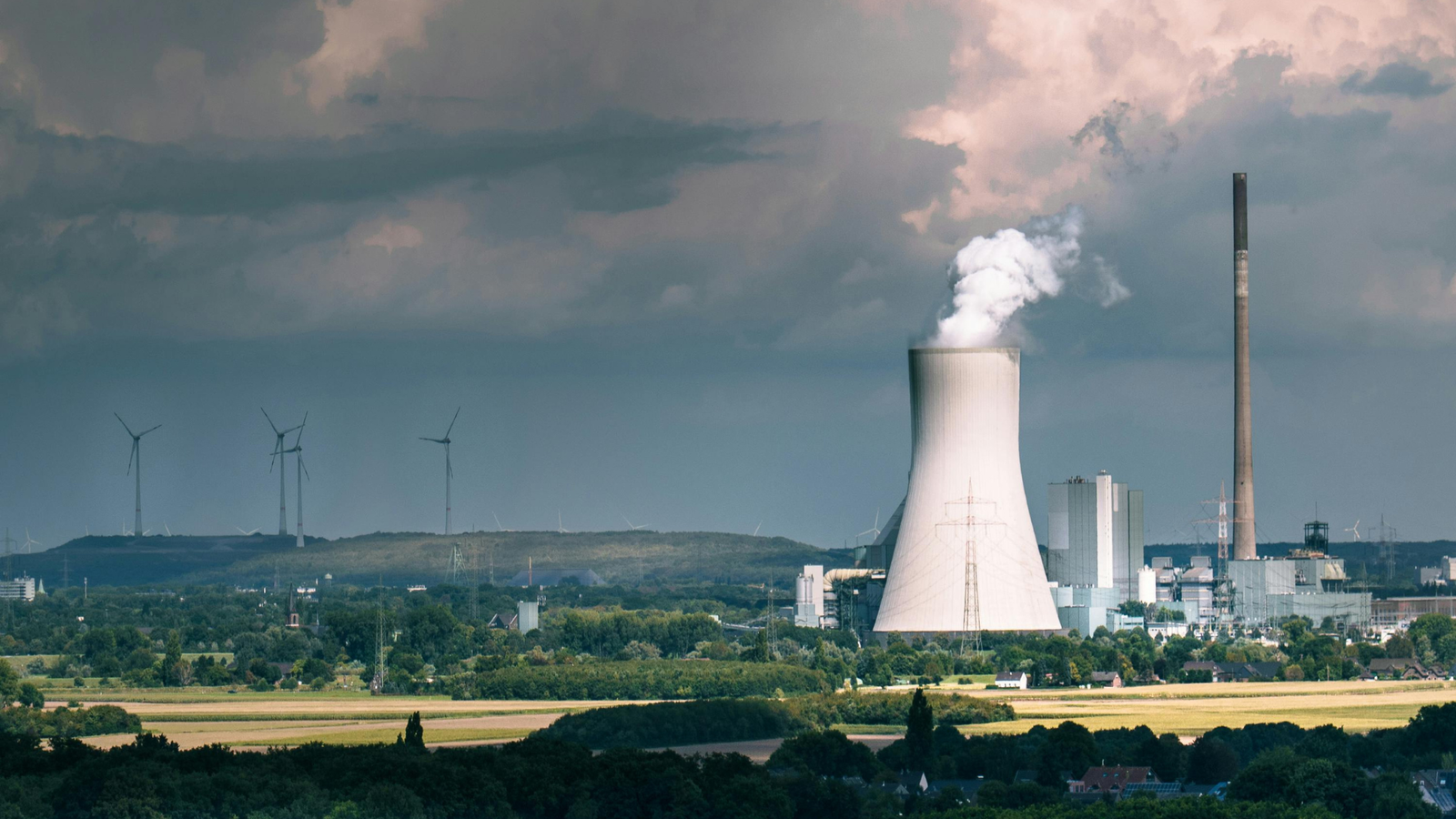
The featured photograph is for representation only.